Dissolve
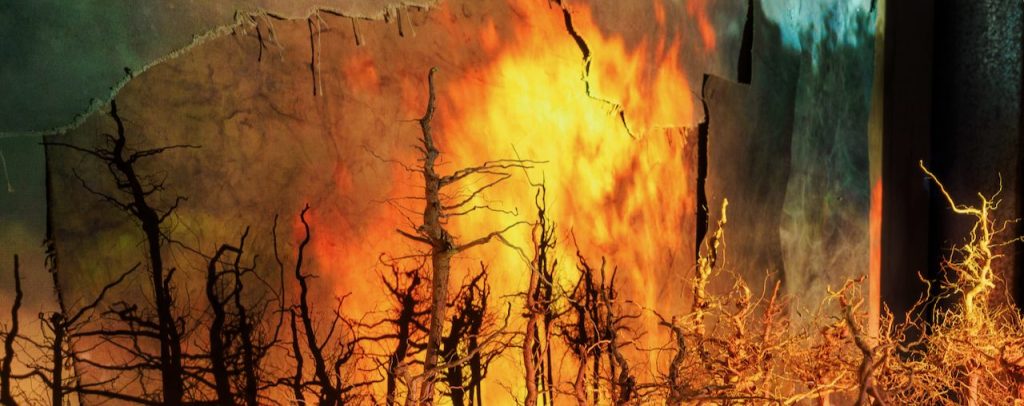
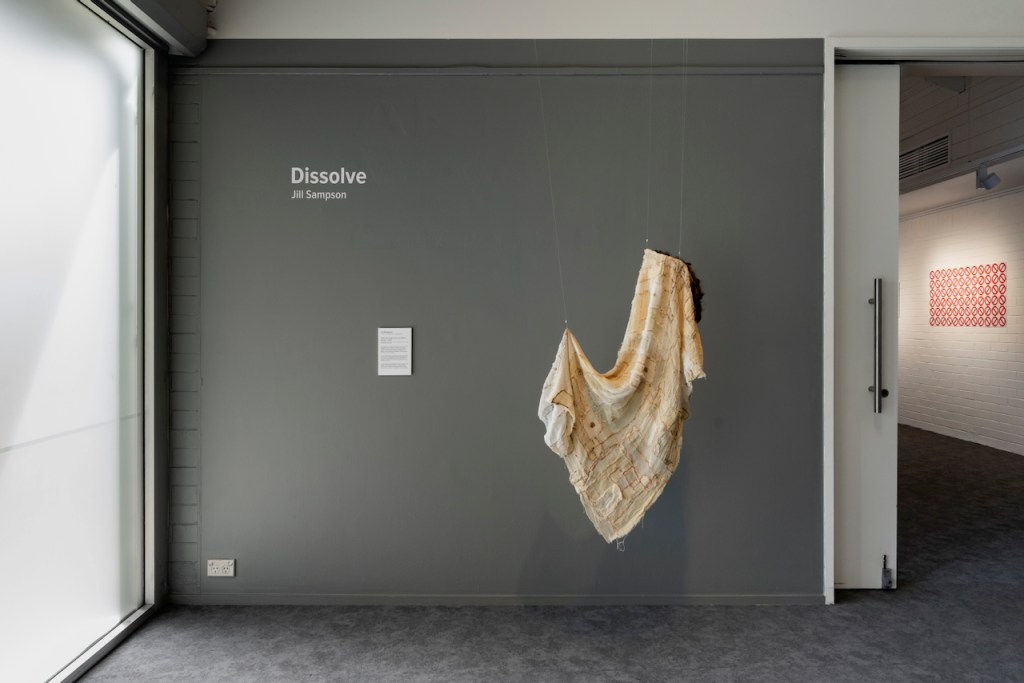
Dissolve is a mixed media exhibition by artist Jill Sampson, that explores the experience of Myeloma and the bio-medical body in parallel with the effects of human interventions on the land and its interconnected ecosystems. Through careful configurations of re-claimed objects and materials (agricultural, medical, domestic, natural), Dissolve stages moments of crisis and recovery, for the artist herself and for the natural world. Finding sympathetic parallels, journeys of healing, and a fragile future held in human hands.
Sampson lives and works on her ‘Land for Wildlife’ family farm on Buyibara/Kaiabara country, Wakka Wakka Nation. It is where she grew up, maintaining a lifelong connection and has now returned to live. She manages small herds of beef cattle that live along-side wildlife, while caretaking the land for biodiversity. Her art practice has roots in Arte Povera, Environmental Art and Expressionism; being always embedded in the land and experience of her home place.
Since 2020 Sampson has experienced extreme personal change through the effects, damage and treatment of Multiple Myeloma, an incurable blood cancer. While curiously observing her own cycle of disintegration and recovery she draws parallels with her experience of human driven changes to the climate, land and ecosystems of her home.
Artist talks:
12pm Saturday 14 February, 2026
at the Logan Art Gallery, Qld.
For the recording of my instagram live artist talk go to:
@loganartgallery
For exhibition essay go to: Staying with the trouble by Beth Jackson
opening event:
6 – 8pm Friday 30 January, 2026
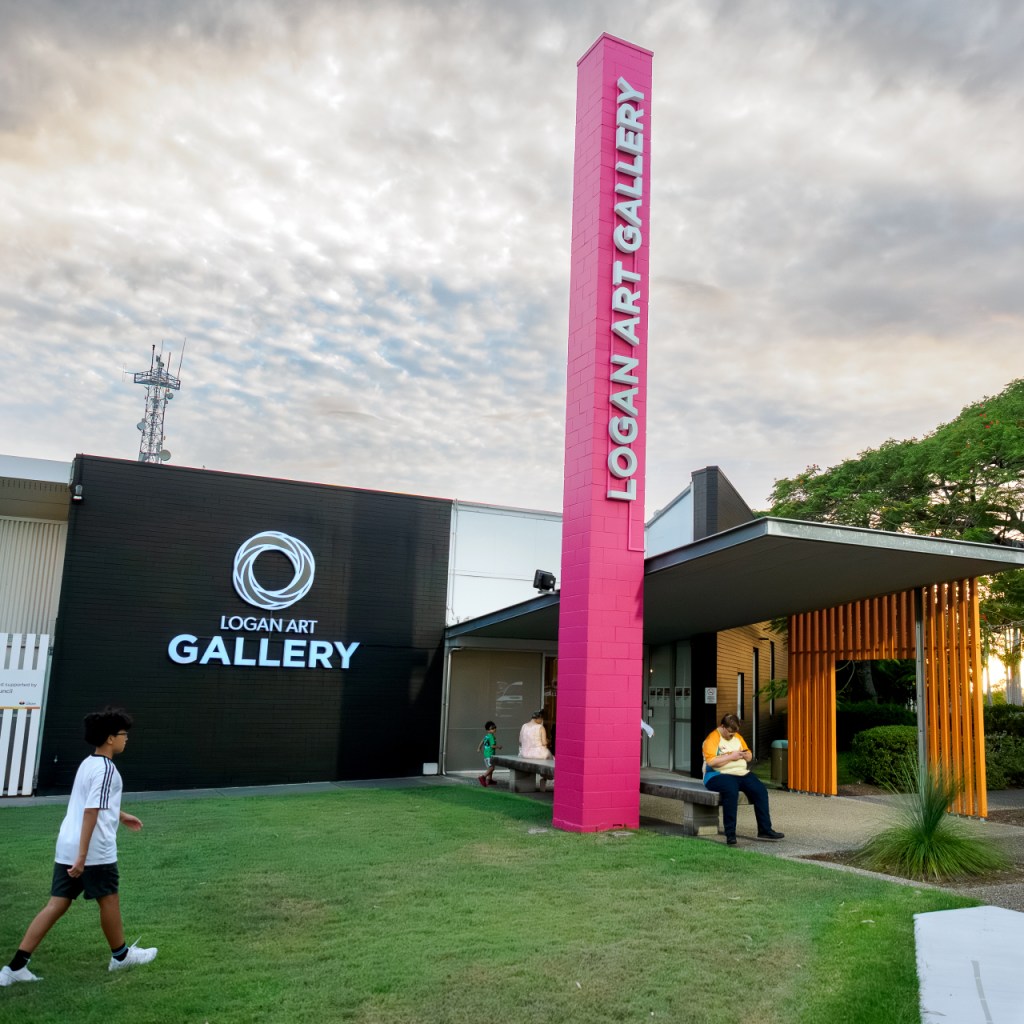
Logan Art Gallery
Dissolve
31 January – 28 February 2026
Foyer Galleries
Logan Art Gallery
Wembley Rd & Jacaranda Avenue, Logan Central QLD
Opening hours: 10am – 5pm Tuesday to Saturday.
ENTRY IS FREE.
*I am continuing to update this page with images and information about the artworks.
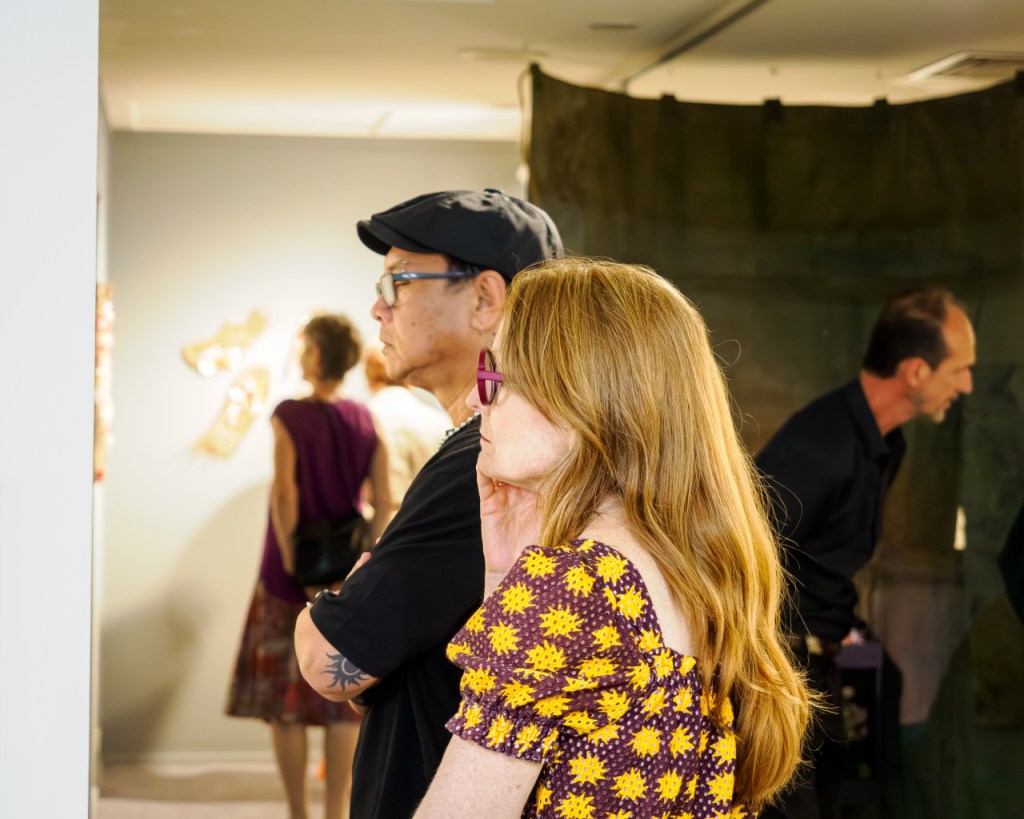
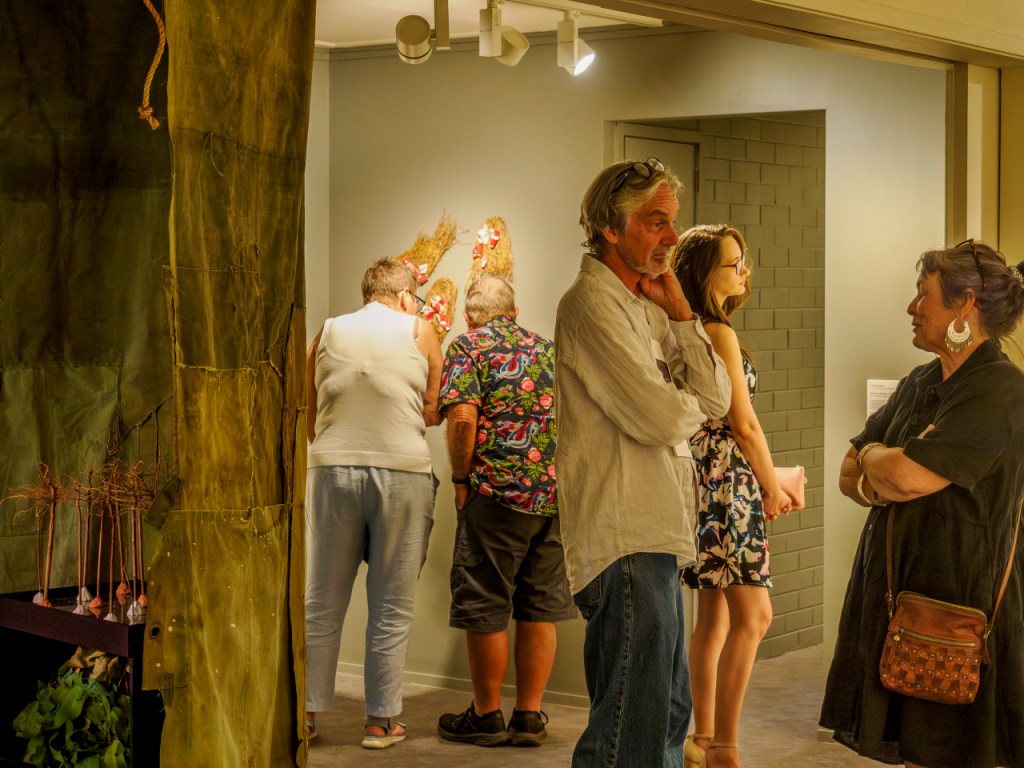
Opening event photos. Please use side arrows to scroll through these photos by Malcolm Paterson.
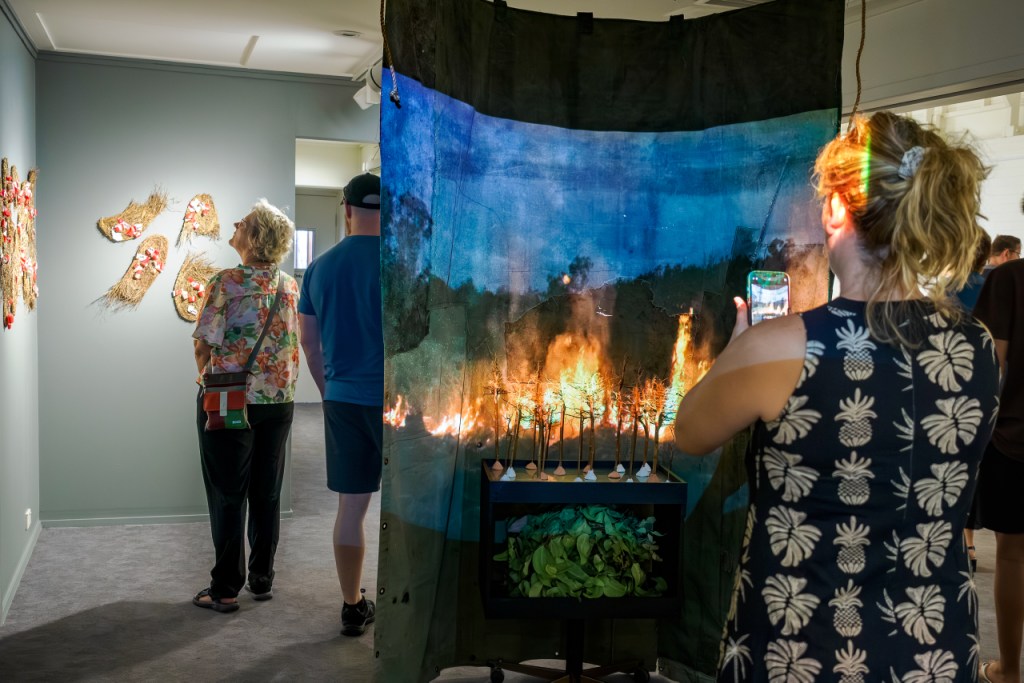
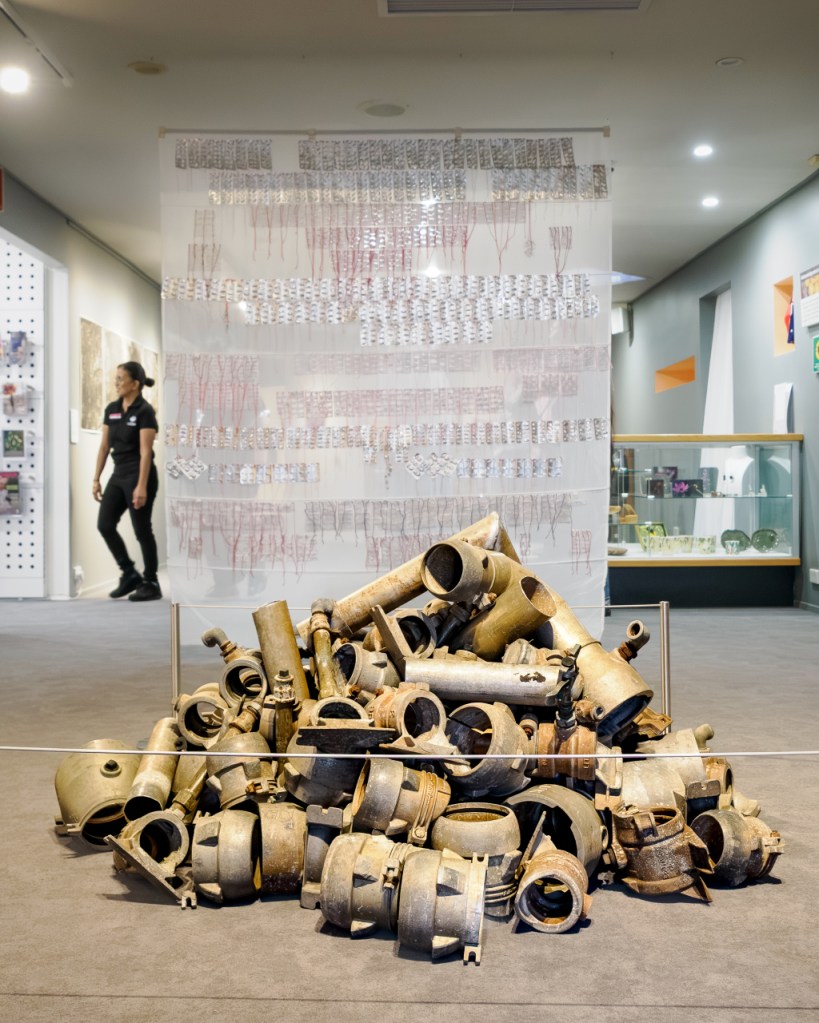
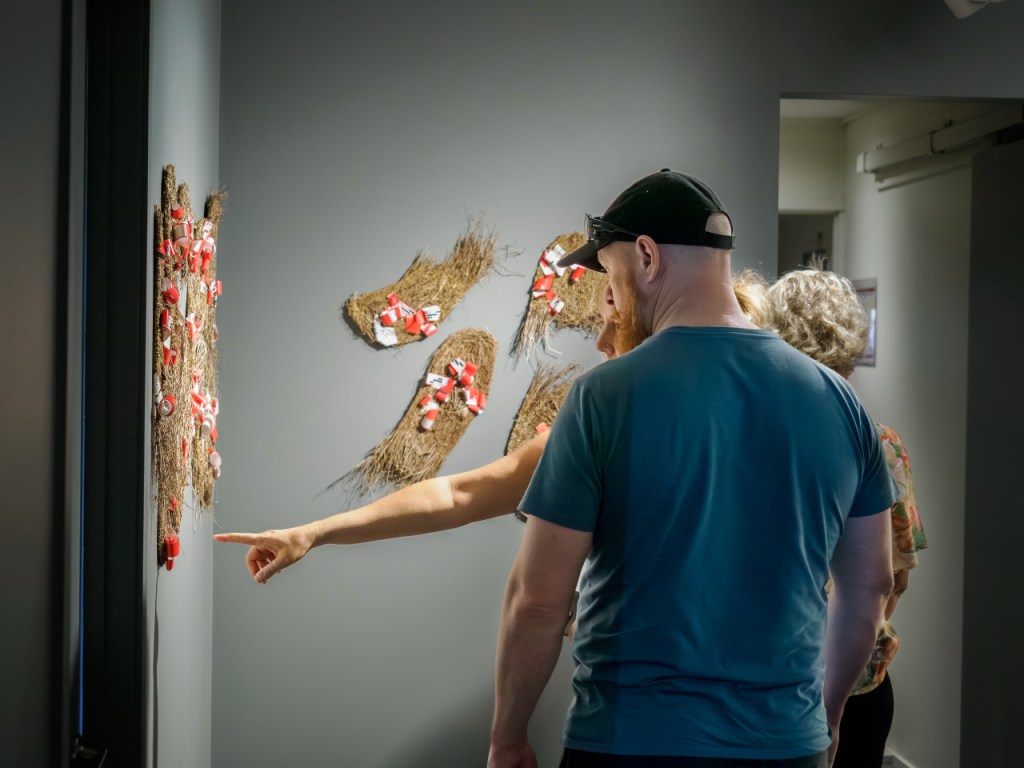
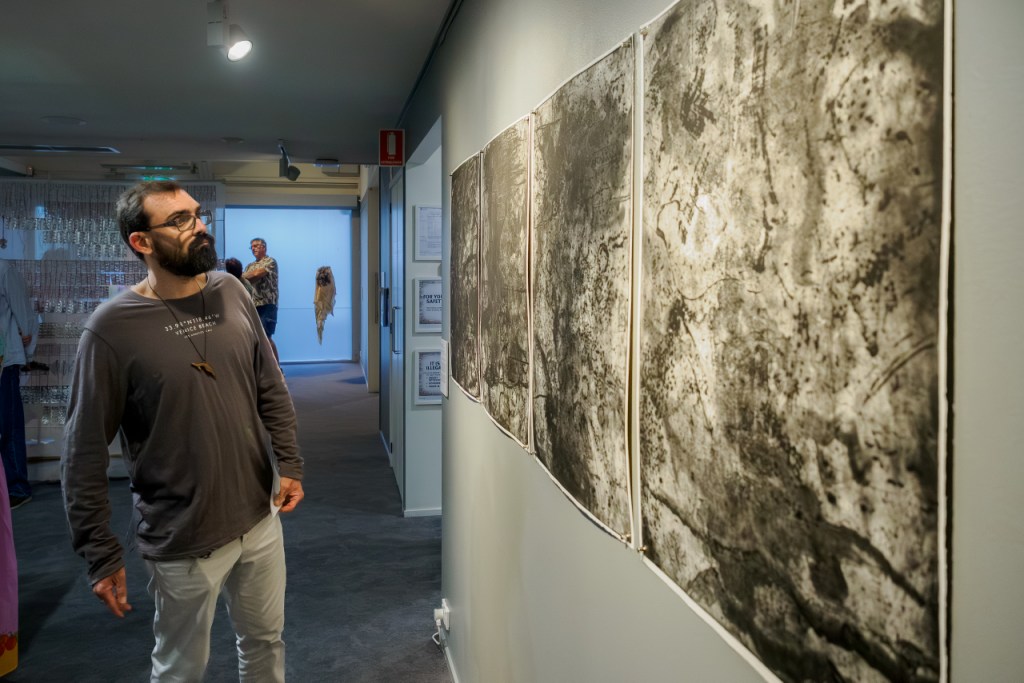
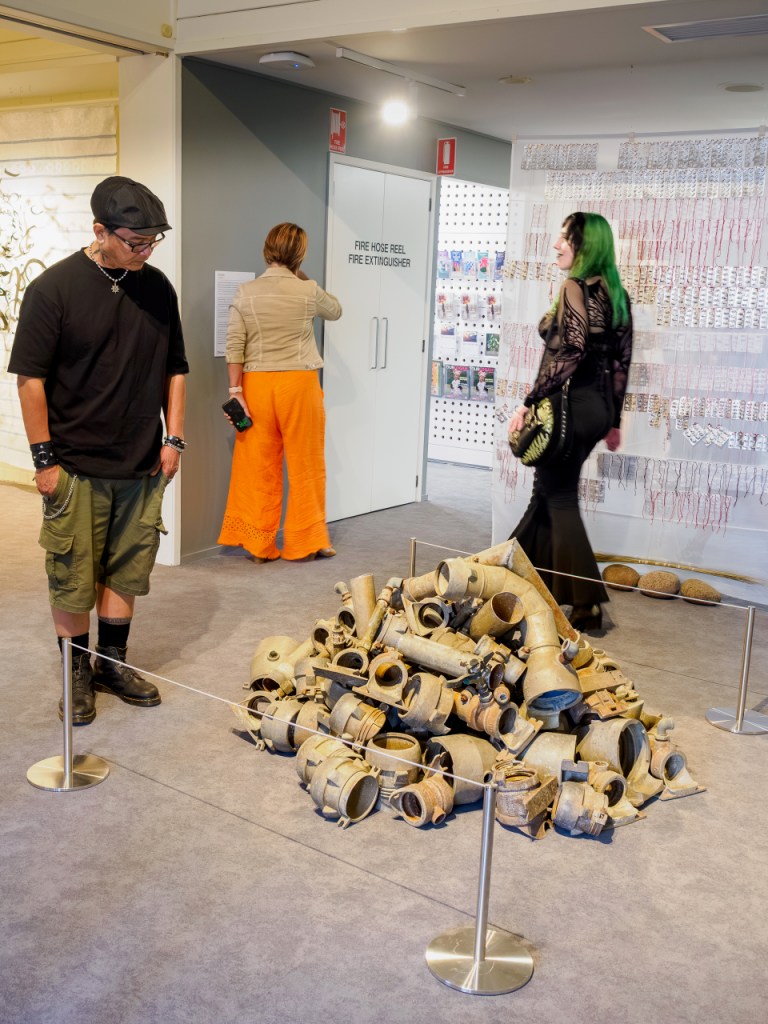
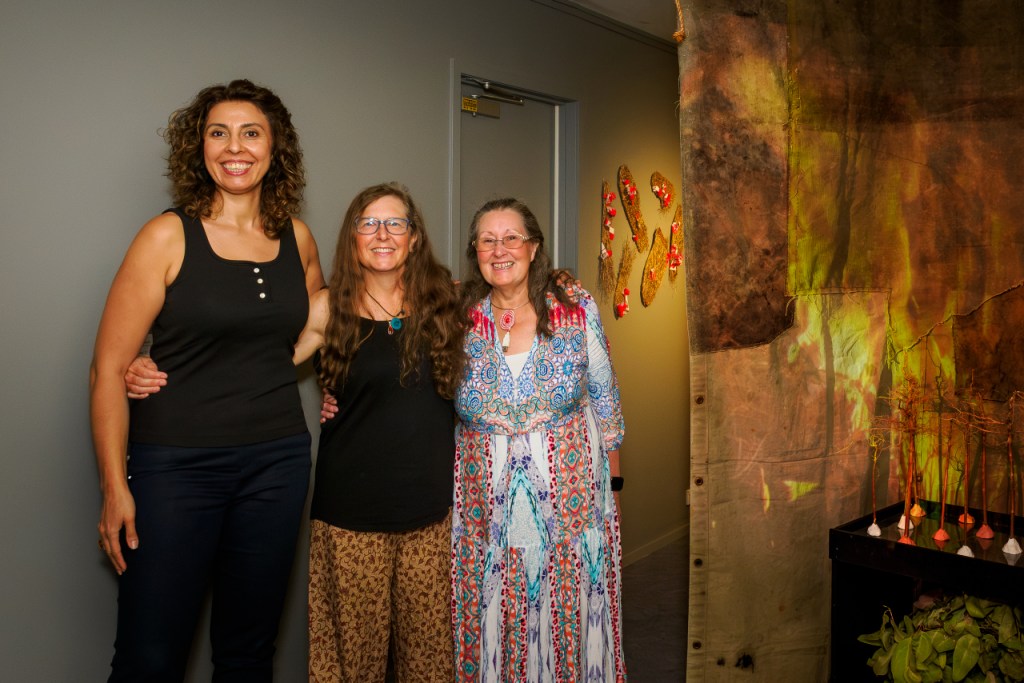
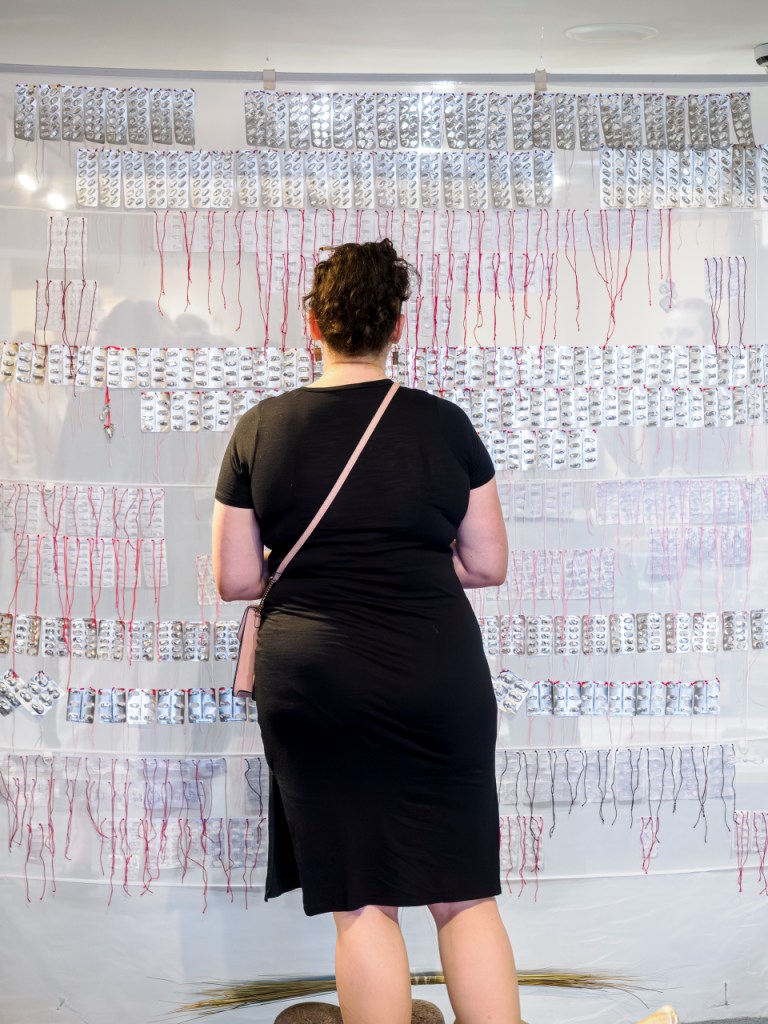
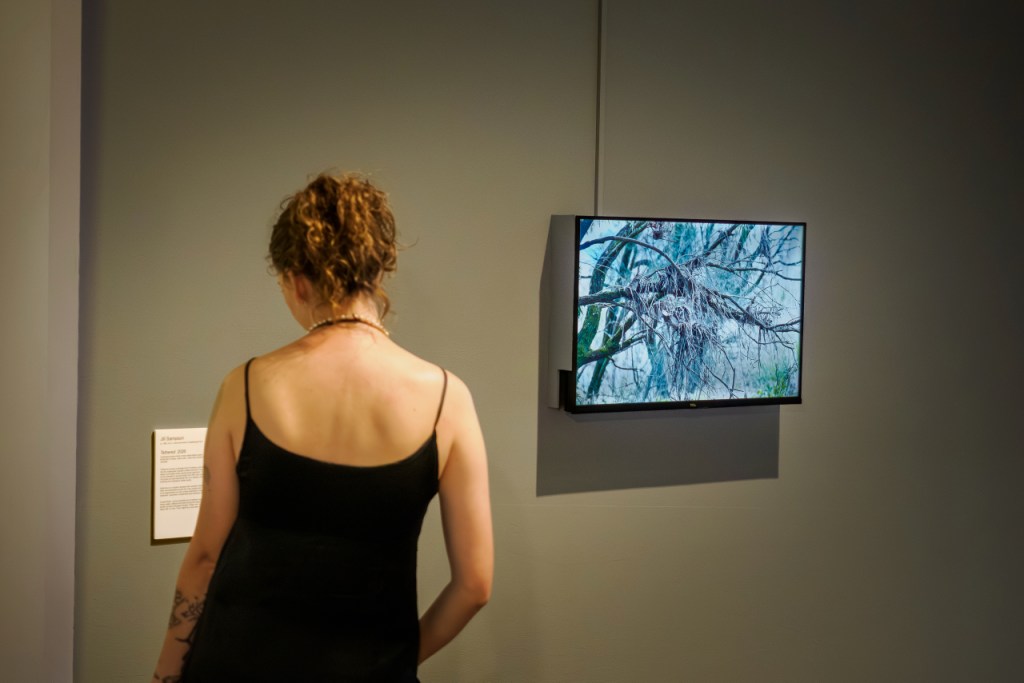
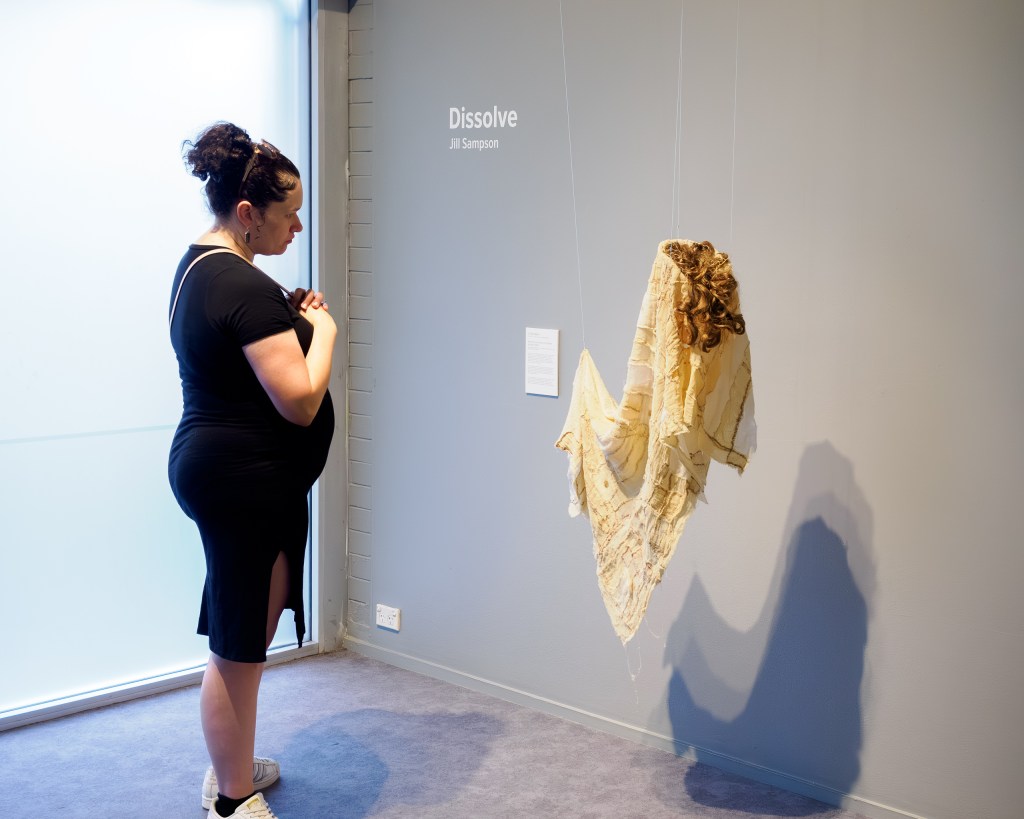
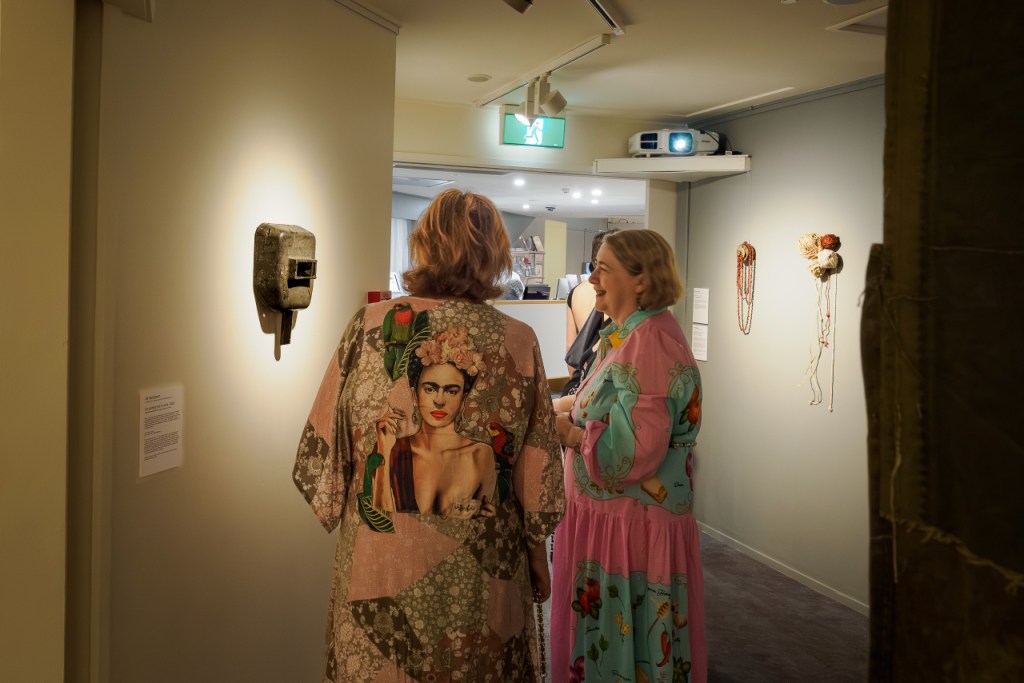
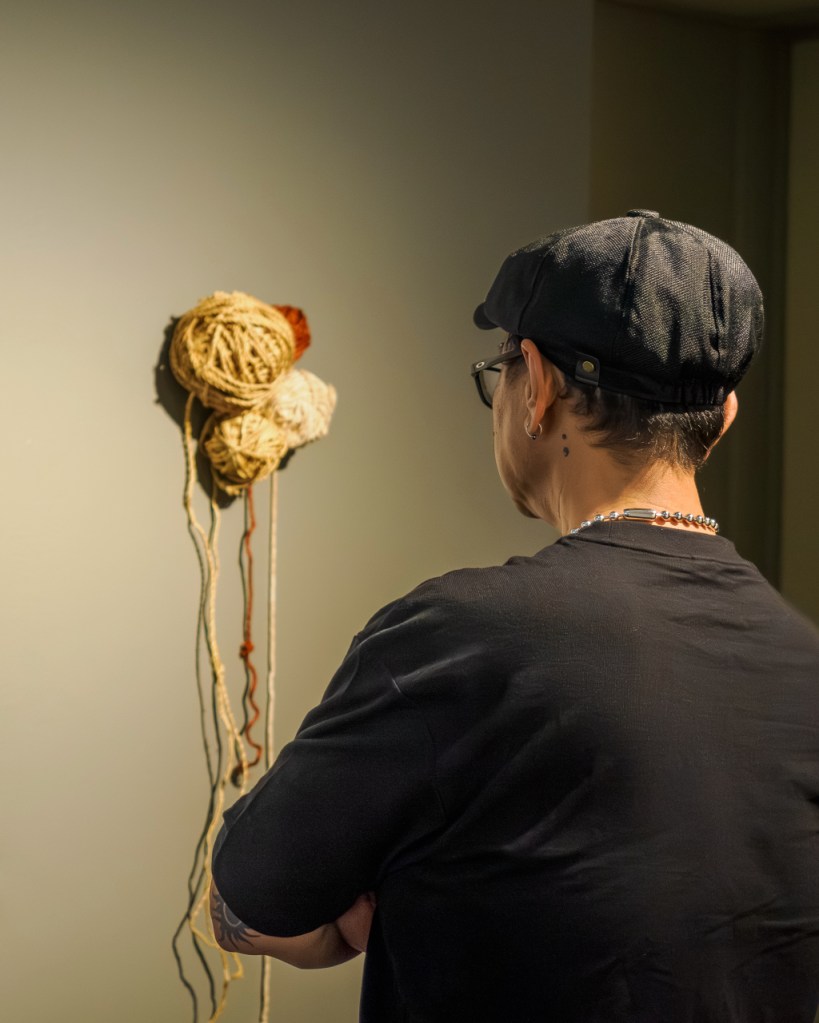
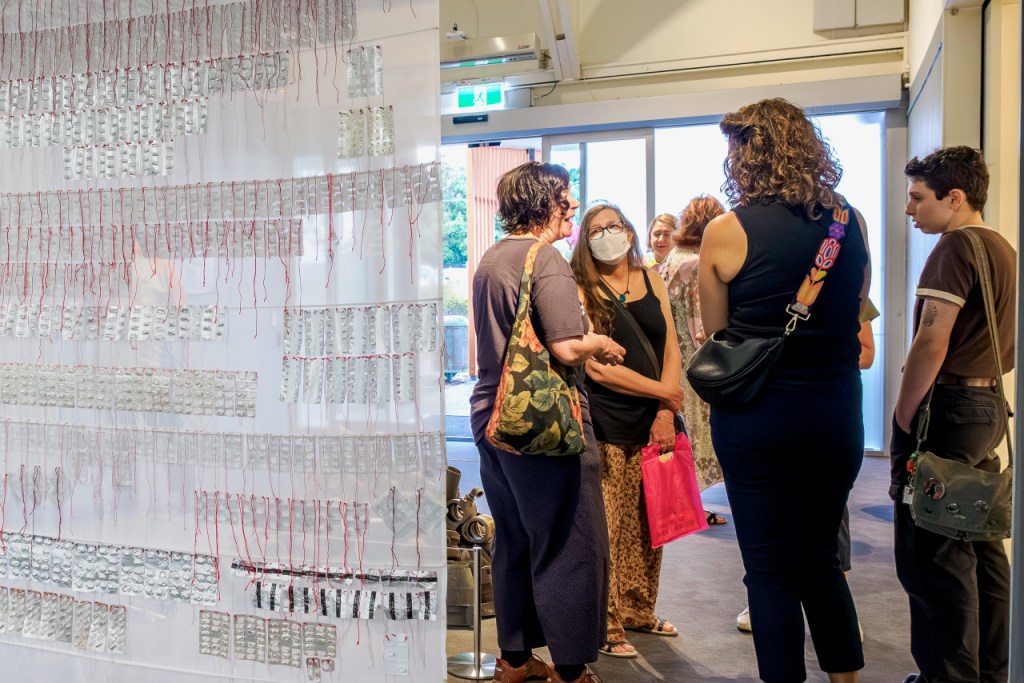
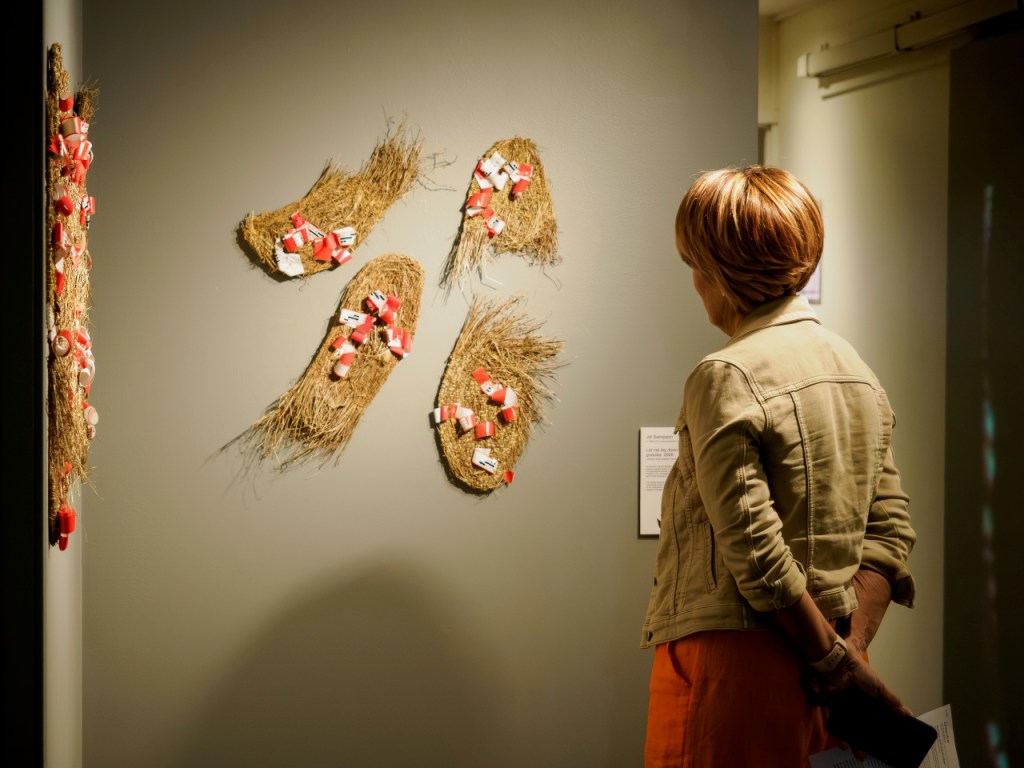
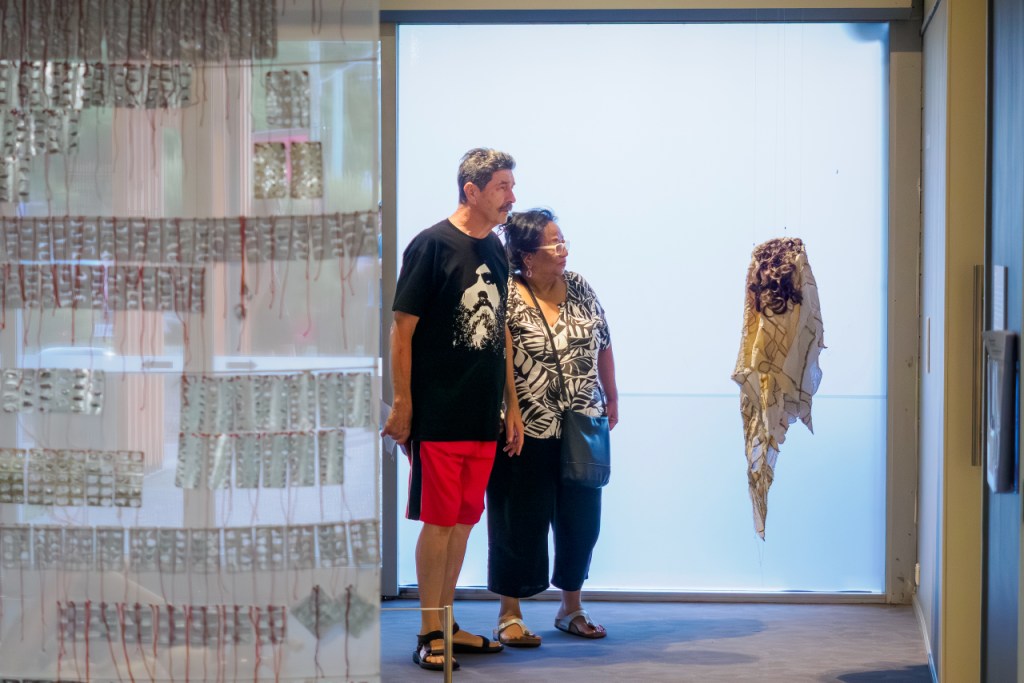
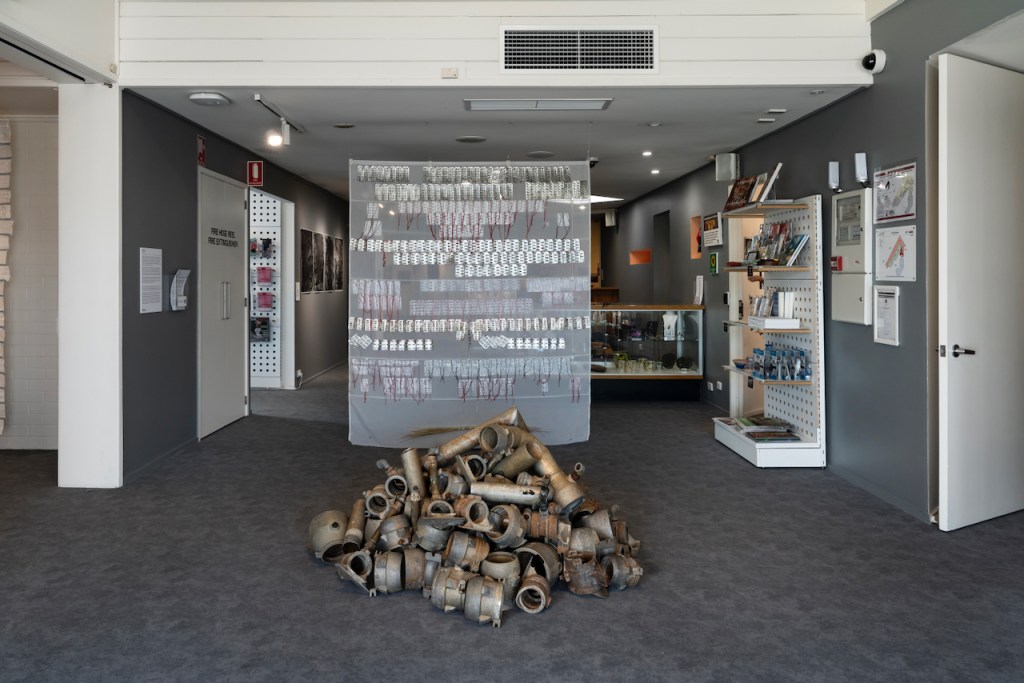
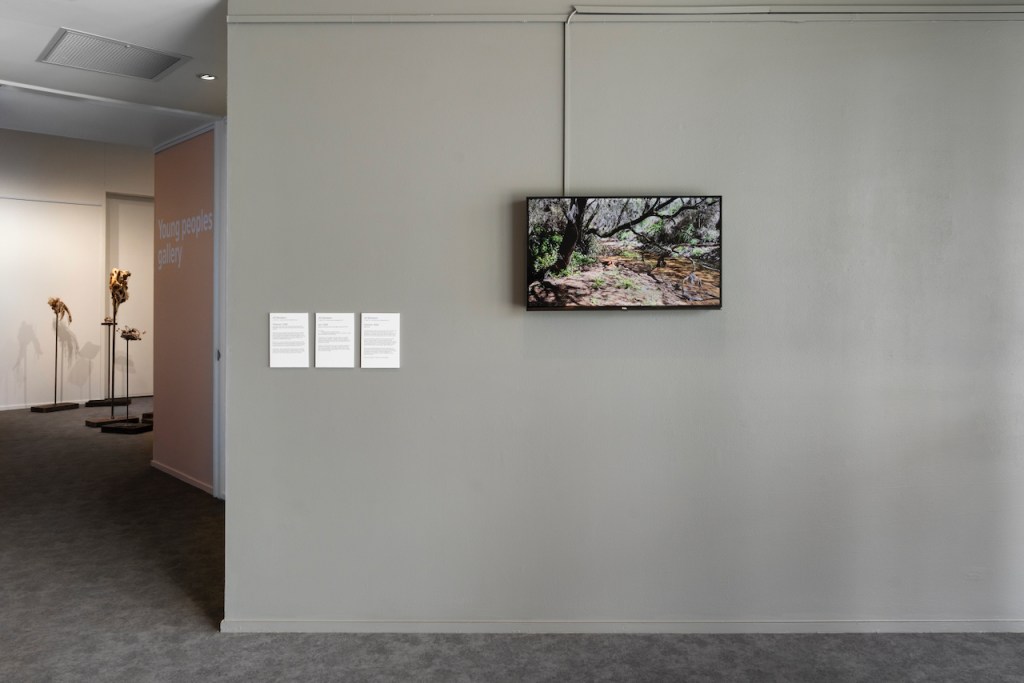
Overview of Dissolve below. Use the arrows to scroll through the photos. Photo by Louis Lim.
Artist talk: Thanks to all who came along to my artist talk on 14 February, 2026, at Logan Art Gallery. Use side arrows below to scroll through some photos from my talk.
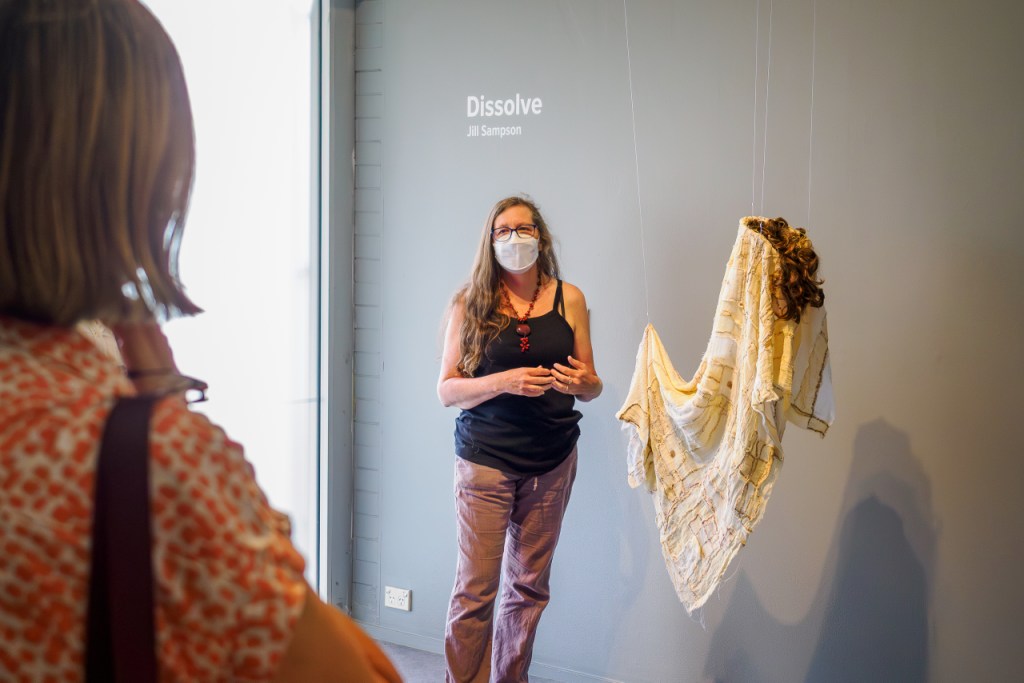
Artist talk, featured artworks: Hold me close and Cut before the fall, photo Malcolm Paterson 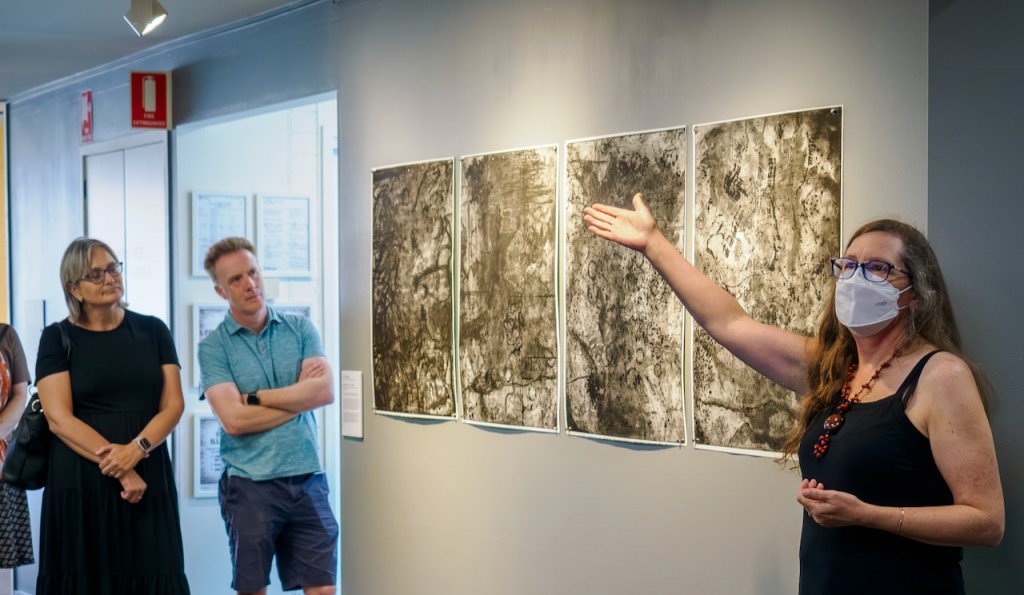
Artist talk, featured artwork: Altered Land 1-4, photo Malcolm Paterson 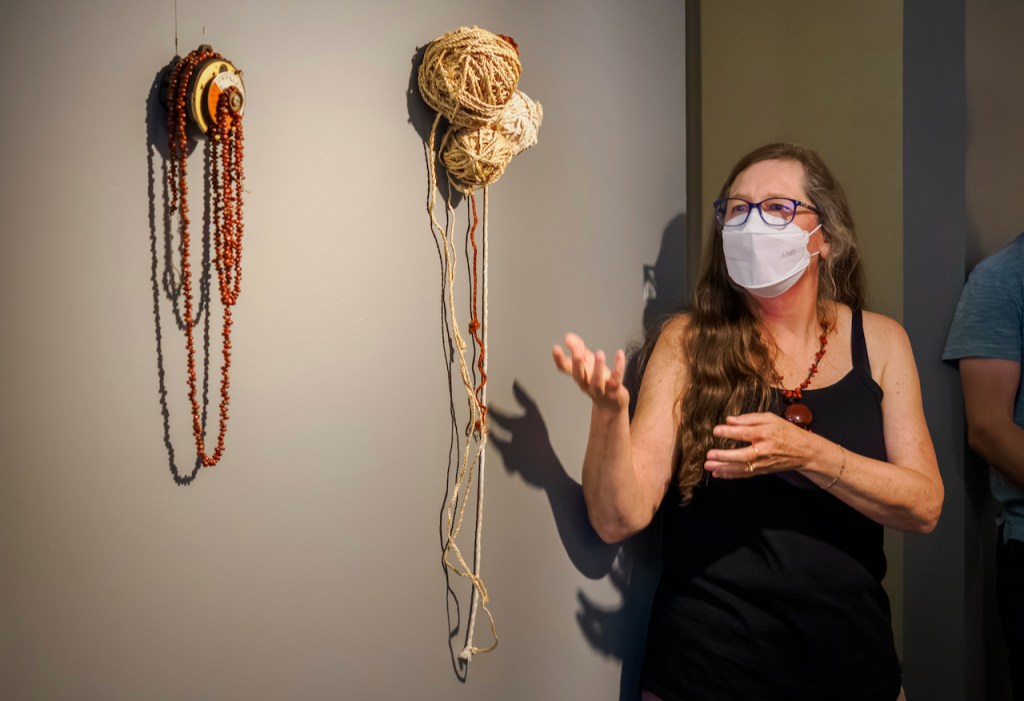
Artist talk, featured artworks: 459 days… and useless/useful (how long is a piece of string), photo Malcolm Paterson 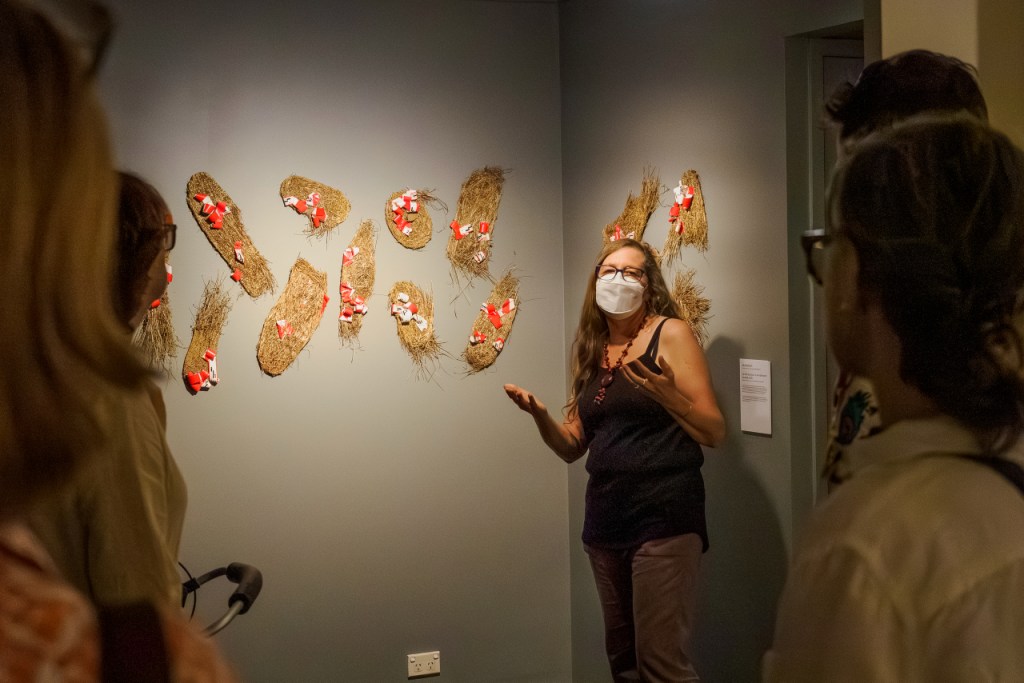
Artist talk, featured artwork: Let me lay down in the tall winter grasses, photo Malcolm Paterson
Dissolve
Below are images of the individual artworks with their statement text.
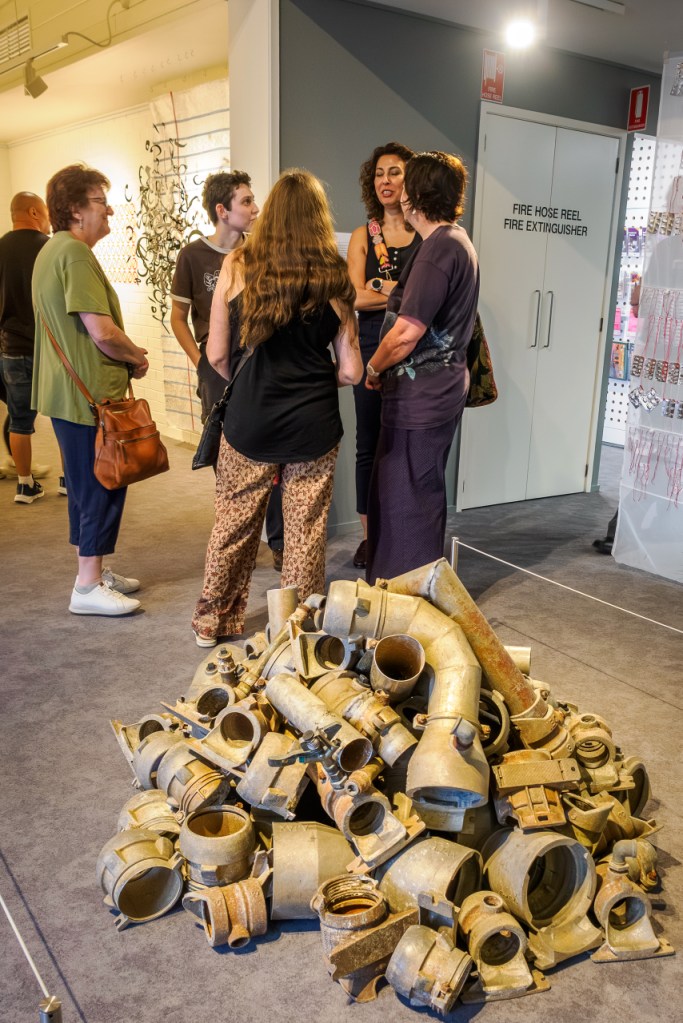
ism
2026
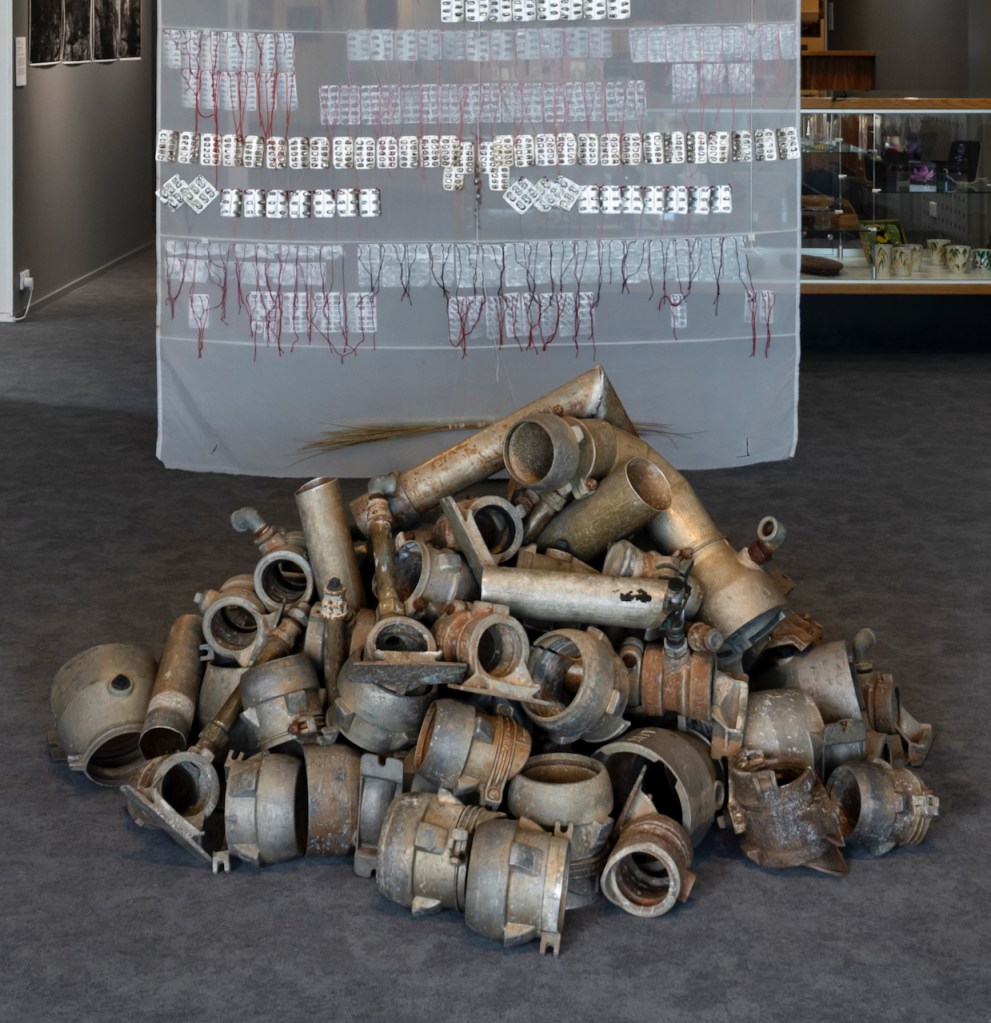
agricultural hand shift irrigation pipes and fittings.
size variable each time installed
ism (noun)
1. a distinctive doctrine, cause or theory
2. an oppressive and especially discriminatory attitude or belief
(Merriam-Webster online dictionary)
The genesis of ism is images from war viewed on a television screen during my childhood.
In addition, the use of irrigation materials invites exploration of scarcity, ecological changes and the hierarchy of control over water resources; alongside personal family farm-life stories. During my childhood these were part of an irrigation system that watered crops or pasture. Twice daily my father would lift and carry, often in bare feet, the hand shift irrigation pipes, moving them to gradually water a whole paddock. Then he would repeat this process all over again.
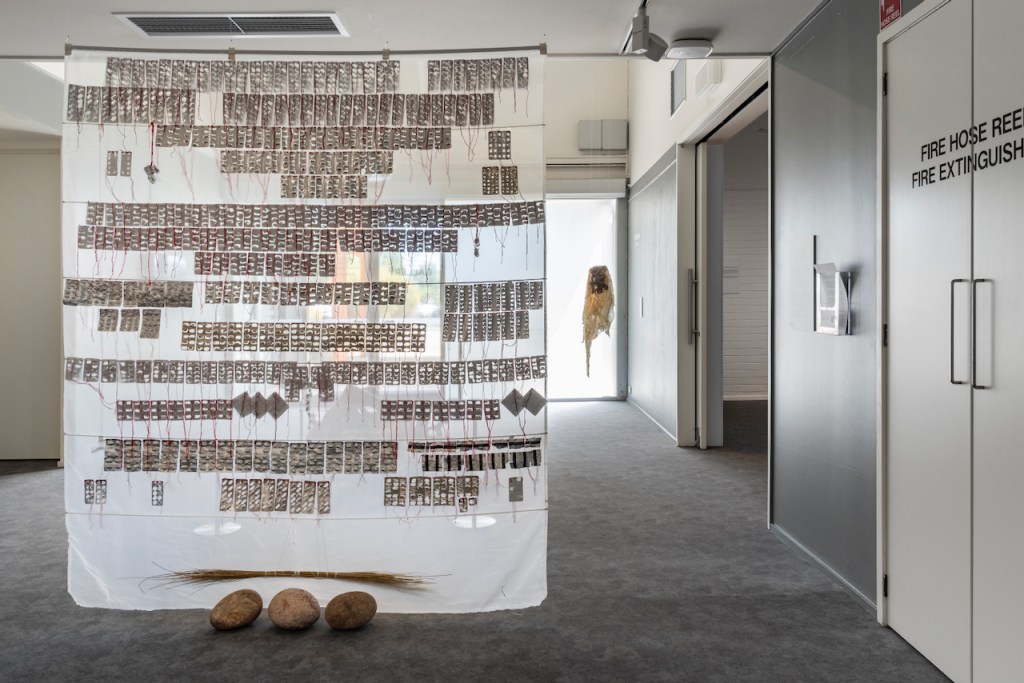
Tethered
2026
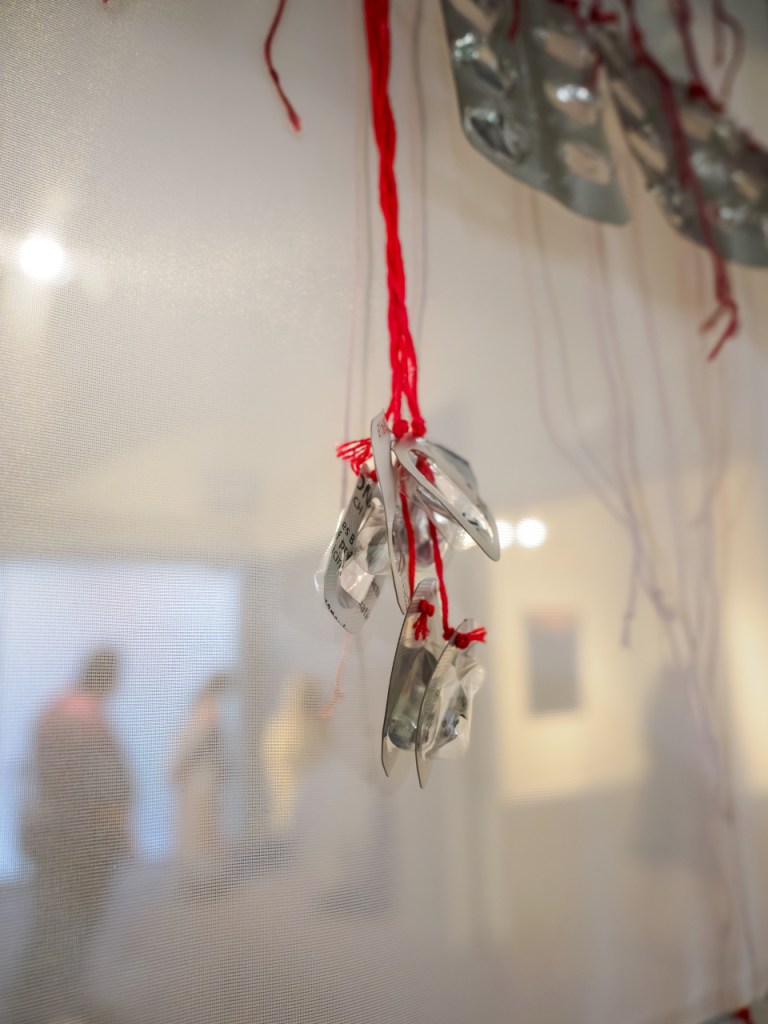
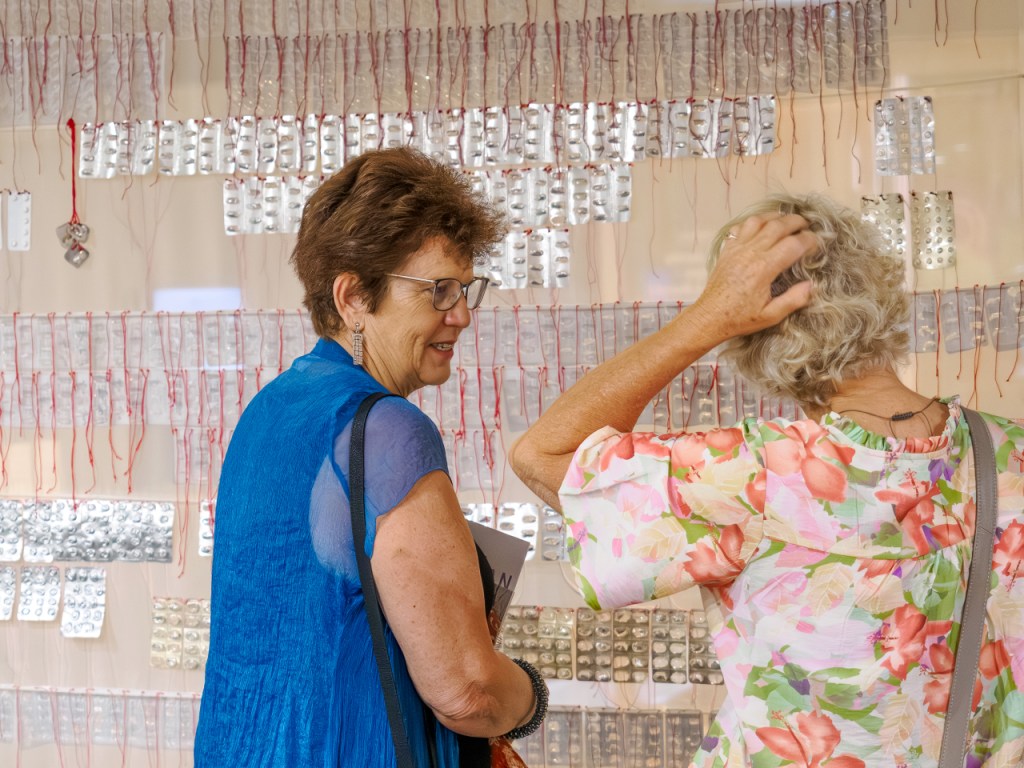
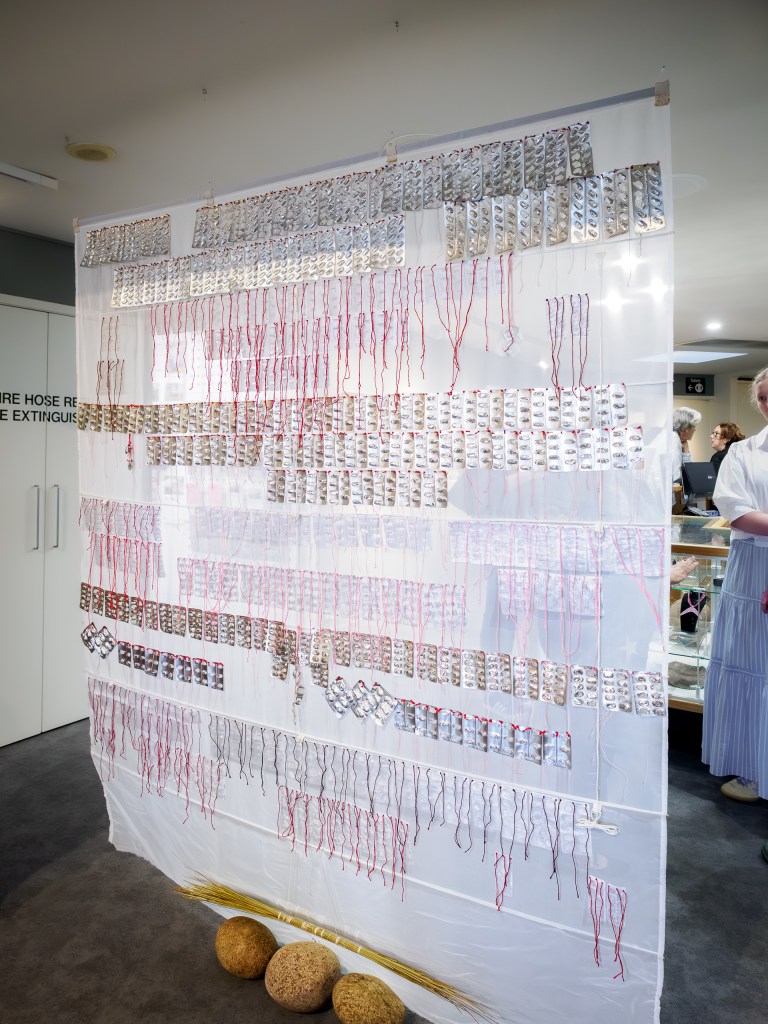
reclaimed window blind, used tablet foils, discarded embroidery thread and cotton yarn, rocks, rushes.
1775mm x 170mm x 2190mm. (L x W x H)
Tethered conveys a strange kind of intimacy, yet lack of privacy, like the inadequate hospital curtains that don’t really join, then easily move apart when people brush past them. Maroon, to red to pink threads of varying length form their own patterns. They are not joined but spontaneously link up in places, covering and soothing the medication blister packs.
Myeloma is a complex disease with complex treatments. While there are similarities across the many people with myeloma, each of us experiences our own unique pathways of disease, damage, treatment, response to treatments and timelines of survival.
Austral Rush, Juncus australis are incredibly tough. They thrive where water collects and pools during wet seasons and yet can quietly survive prolonged drought. These river stones are on this place with no river. Their origin story lies deep in the earth.
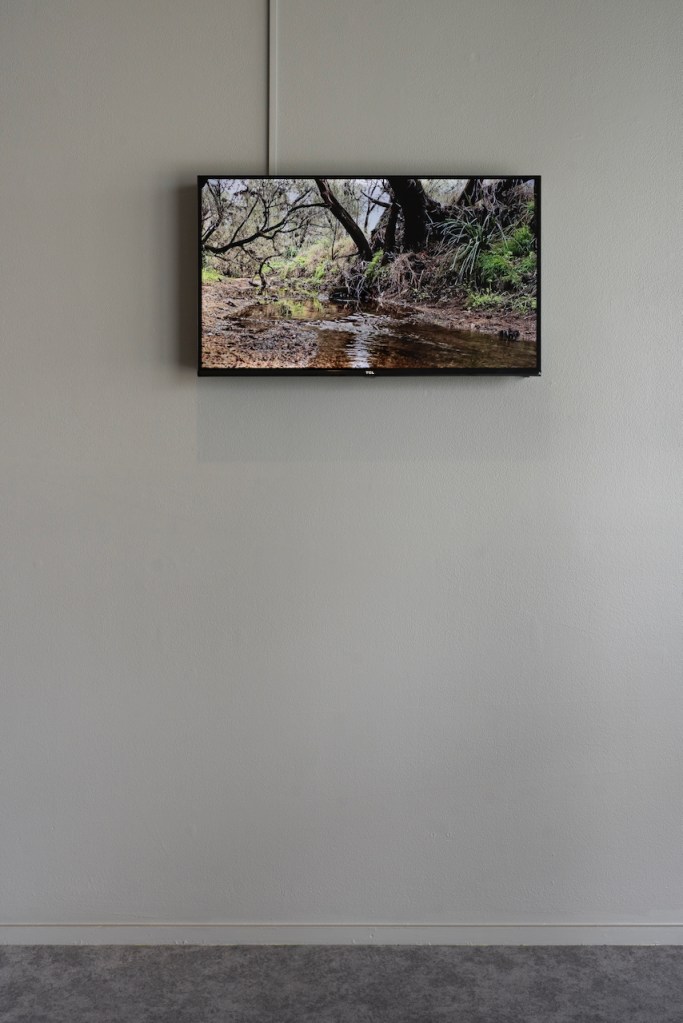
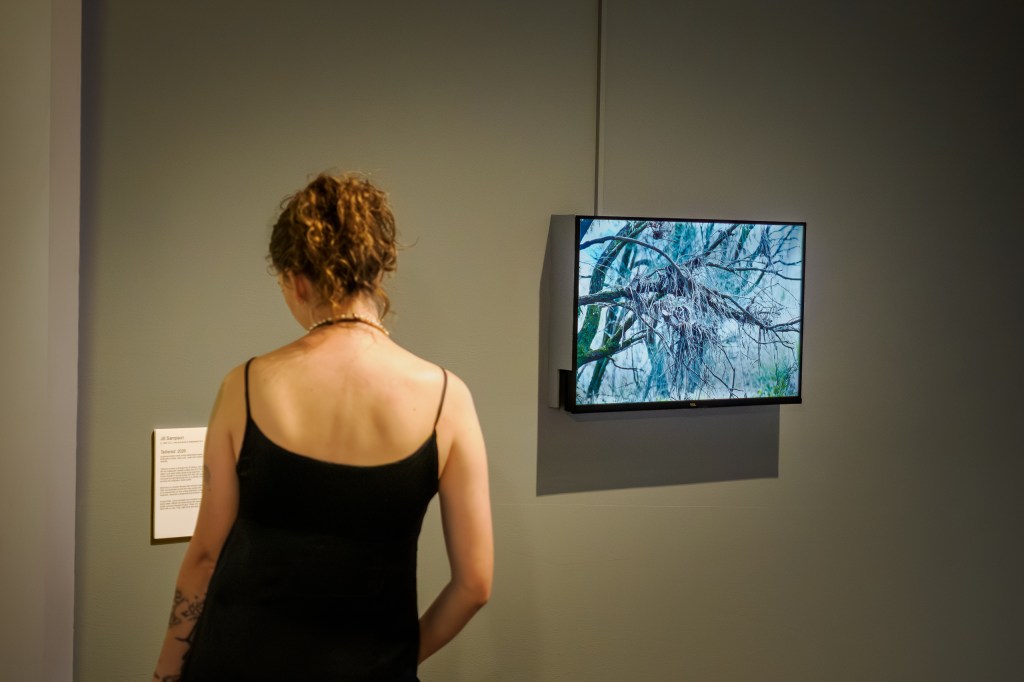
Dissolve
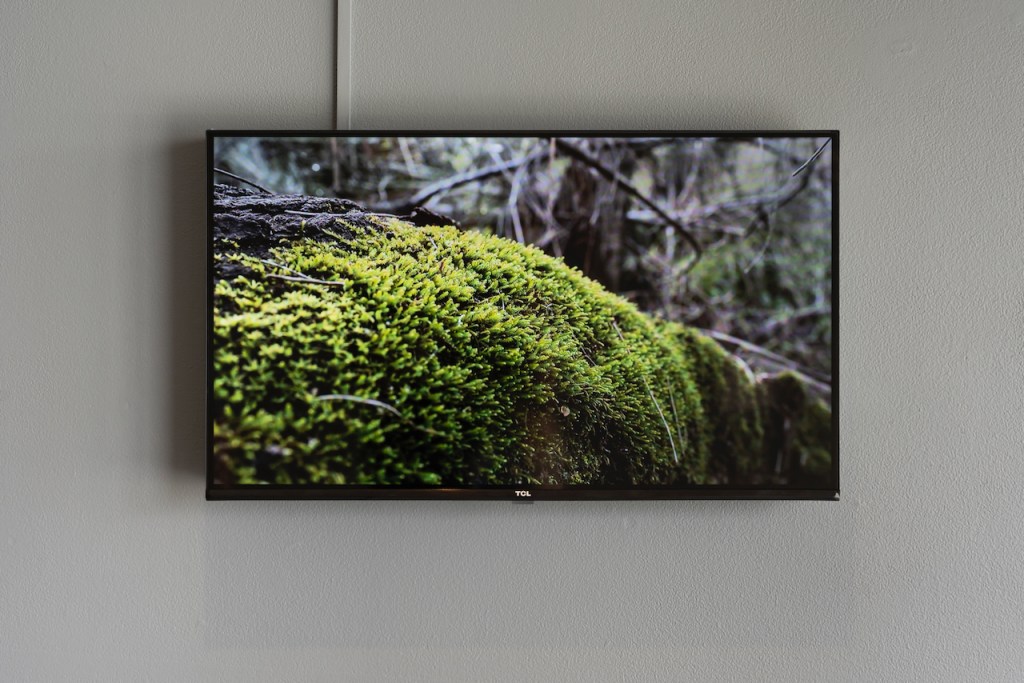
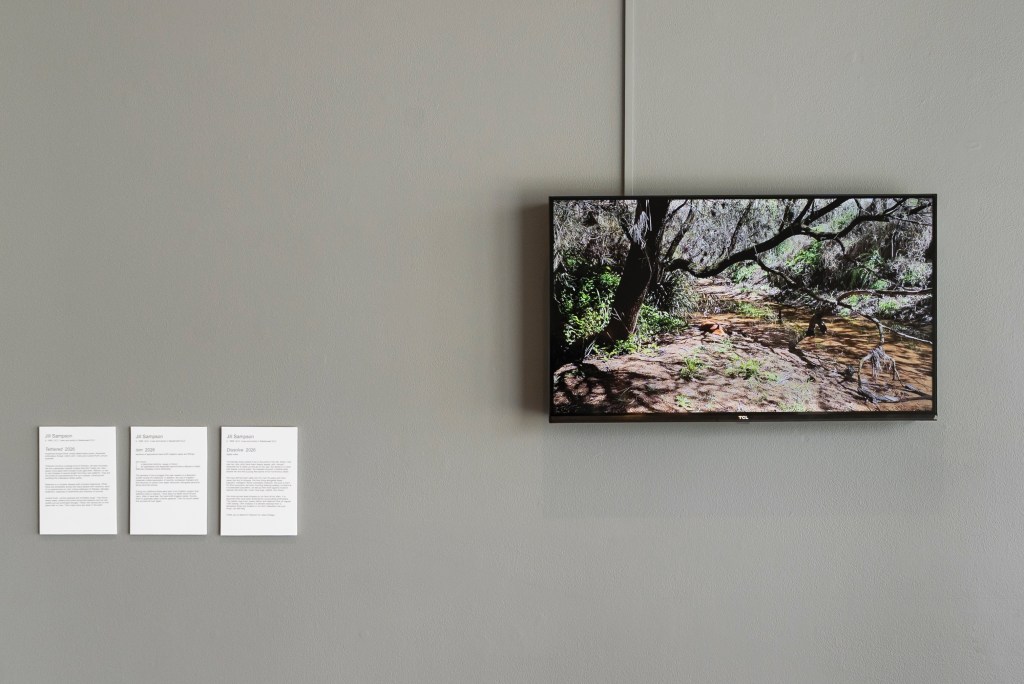
Digital Video with audio
5:23 minutes
This female dingo looked to be in the prime of her life. When I first saw her, she could have been deeply asleep, and I almost expected her to wake up and go on her way. But laying in a creek bed beside running water, the expelled stomach contents piled beside her and the buzzing flies spoke of her horrendous death.
We have farmed beef cattle here for over 50 years and have never lost any to dingoes. We love living alongside these beautiful, intelligent, family orientated creatures. We look to them for their ecosystem services including keeping wallaby numbers at a sustainable population, as well as their work against invasive species like feral cats, foxes, feral pigs, rabbits, and others.
We come across dead dingoes on our farm all too often. It is assumed they have been poisoned by surrounding landholders. The nearby coal mine, power station and National Park do regular 1080 baiting. DNA analysis of a sample obtained from a deceased dingo pup located on our farm classified it as pure dingo, not wild dog.
Thank you to Malcolm Paterson for taking the original video footage.
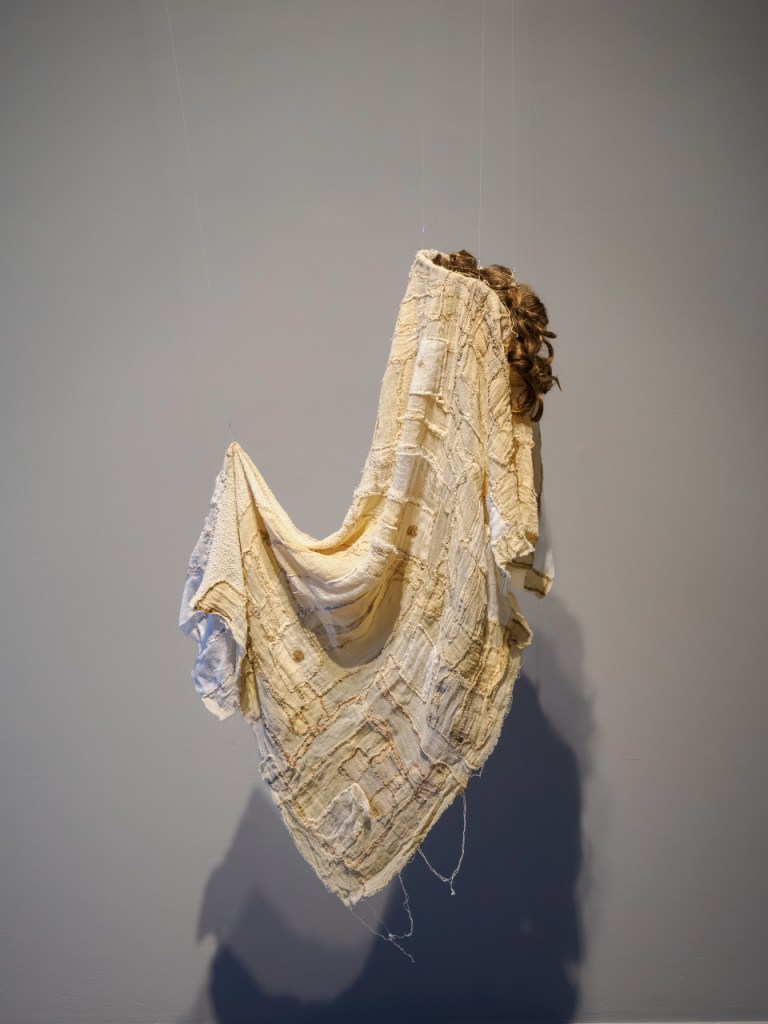
Hold me close and Cut before the fall
2026
used bandages, eco-dyed silk thread, artist’s hair, wire, binding fabric, buttons.
770mm x 3000mm x 1045mm (L x W x H)
While I was very ill all physical touching and intimacy took place during the provision of medical and personal care. These bandages were used to staunch and cover the incursions of needles. My conscious mind became an observer as I sat passively through treatment. One too many trainee cannula insertions and my subconscious rebelled, no longer holding my body calm during this procedure.
Cancer treatment gifted me more life, but it also meant handing control to others and accepting lifesaving treatments that lay down scars of accumulated trauma. When I discovered that my hair would fall out after the Stem Cell transplant procedure, I gradually cut, plaited, tied and stored this tangible loss. My hair has not been cut since.
It’s several years since I began stitching these disposable, single use, poor quality bandages together. No matter how much stitching I do to mend and embody these physical memory carriers, they are fragile and tend toward unravelling. While it continues to grow with each new bandage, it is also falling apart.
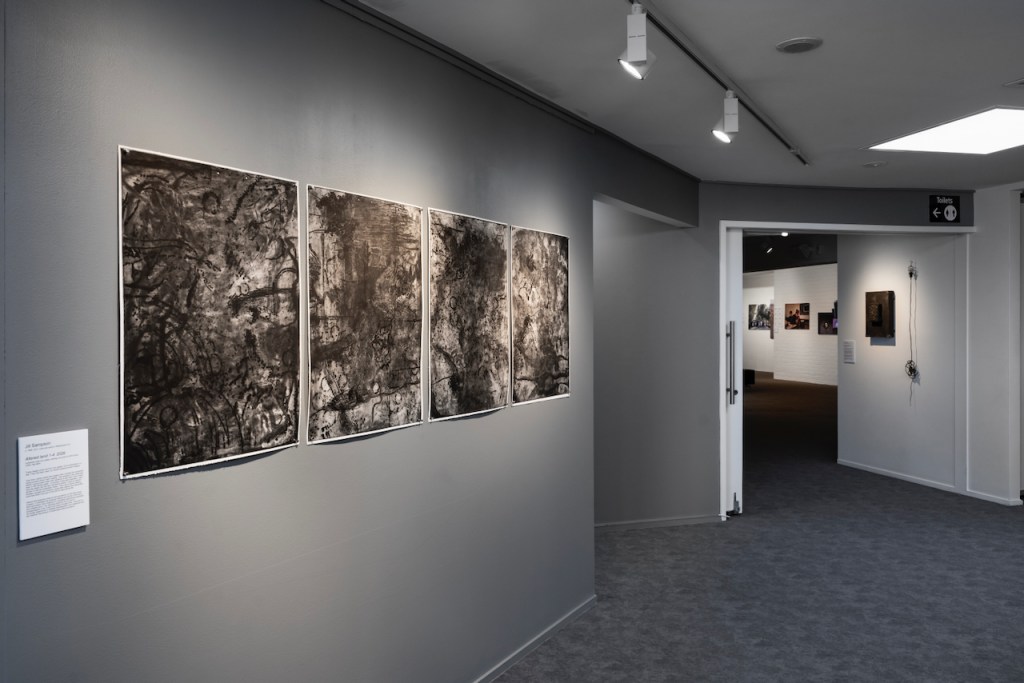
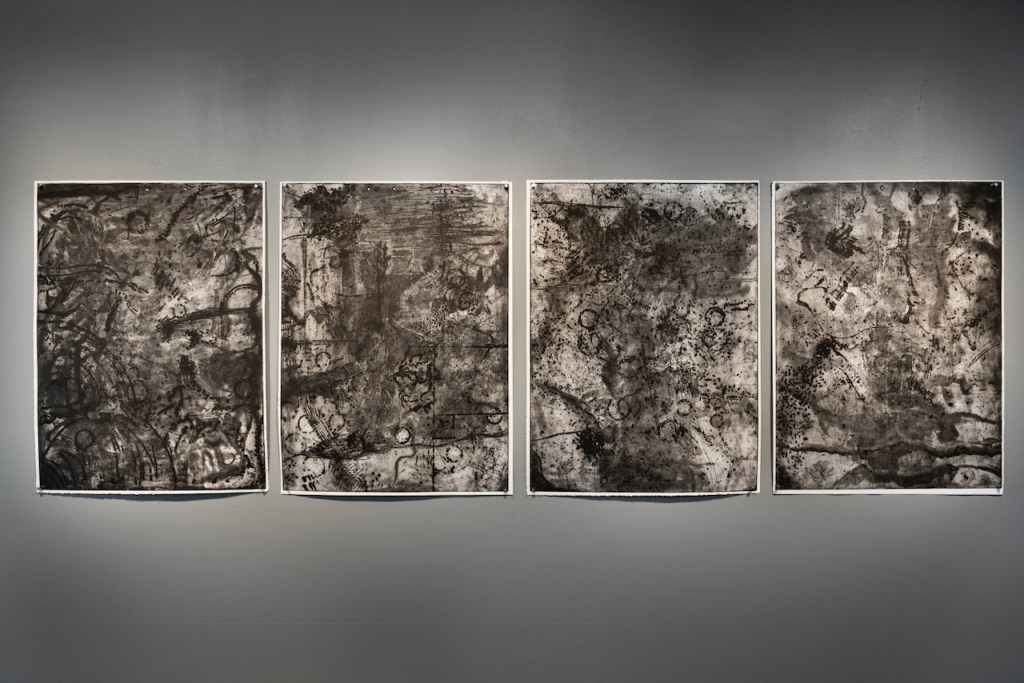
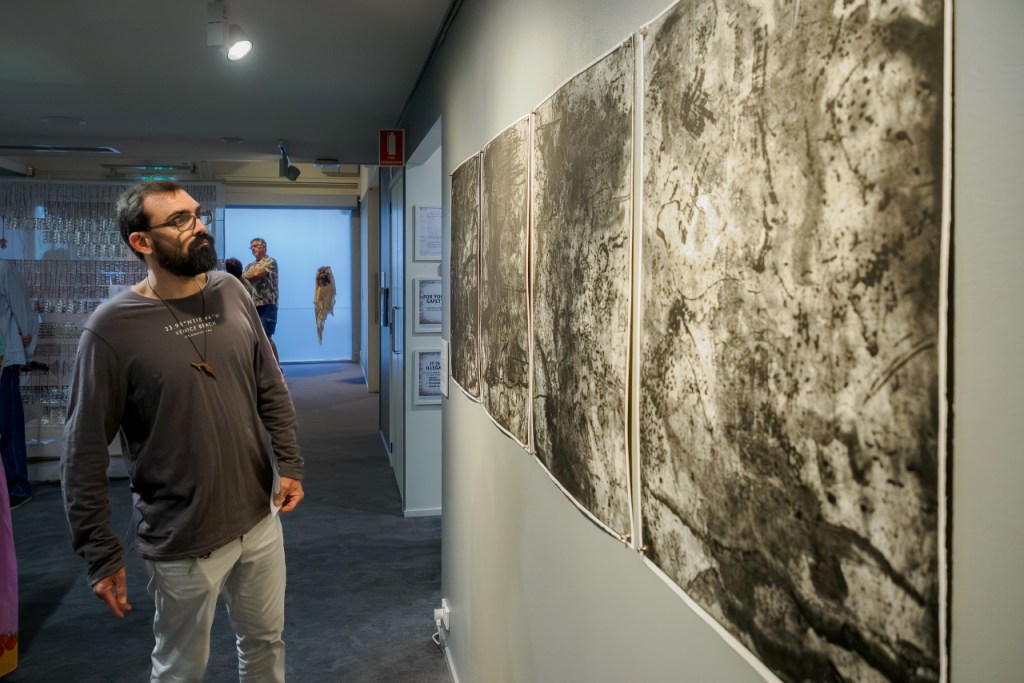
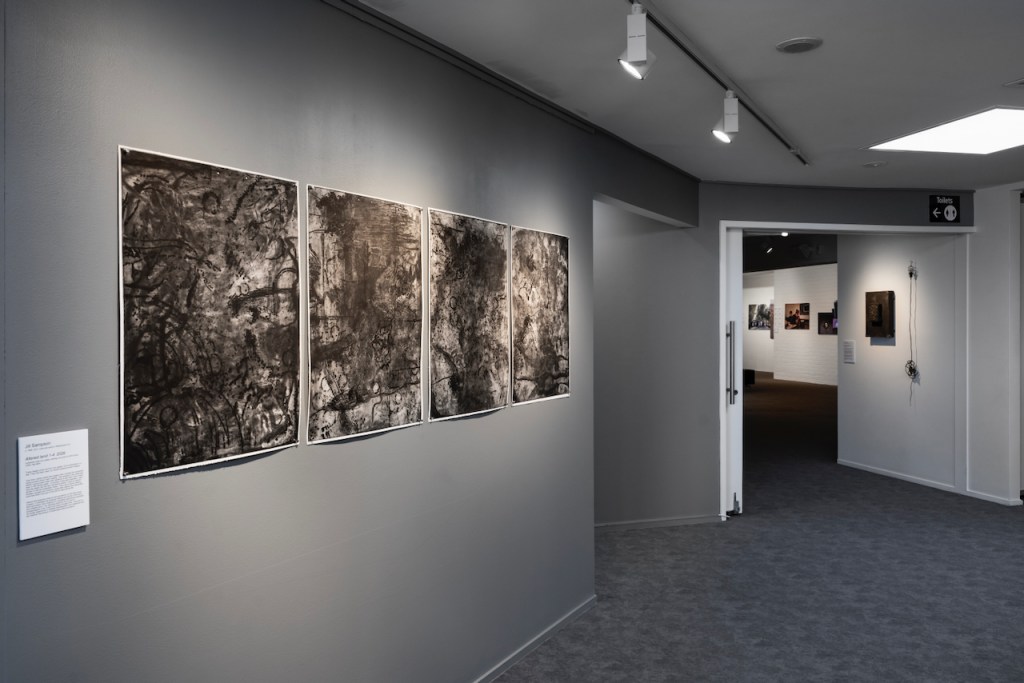
Altered land 1, 2, 3, 4
2026
reclaimed used zinc plates, etching, drypoint, BFK Rives cotton rag paper
1145mm x 755mm
These intaglio prints are from zinc plates I found discarded in a skip. They had been used, so carried existing etched imagery. Over time I partly erased the imagery then overlaid the remainder using process driven mark making. I first worked in the creek bed where I ground each plate with handfuls of wet sand, then rinsed them in the flowing water – a process continually repeated. Later I took the plates into the farm workshop where I used an electric grinder to disrupt embedded marks. I then set to work creating scrapes, gouges and incisions using steel objects and discarded tools that were once part of the farm’s agricultural life.
Altered Land explores erasure and accretions on the land since invasion. It intimates the physical indents and forms of the land, then excoriation from Anglo/Euro-Australian agricultural practices and infrastructure. The resulting artworks are a kind of archaeological x-ray of land and place through time. They link to my bodily experience of skeletal disintegration from Myeloma and the medical intervention of bisphosphonate accretions.
*please note that photographs above lose some of the texture and tonal variations of these intaglio prints.
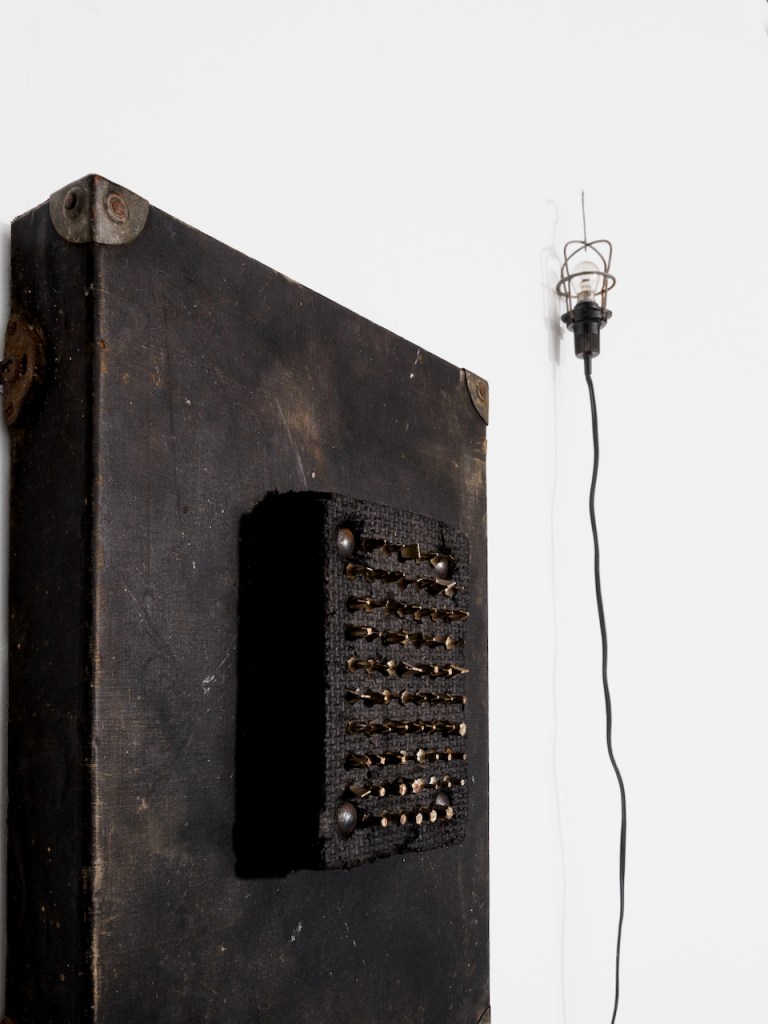
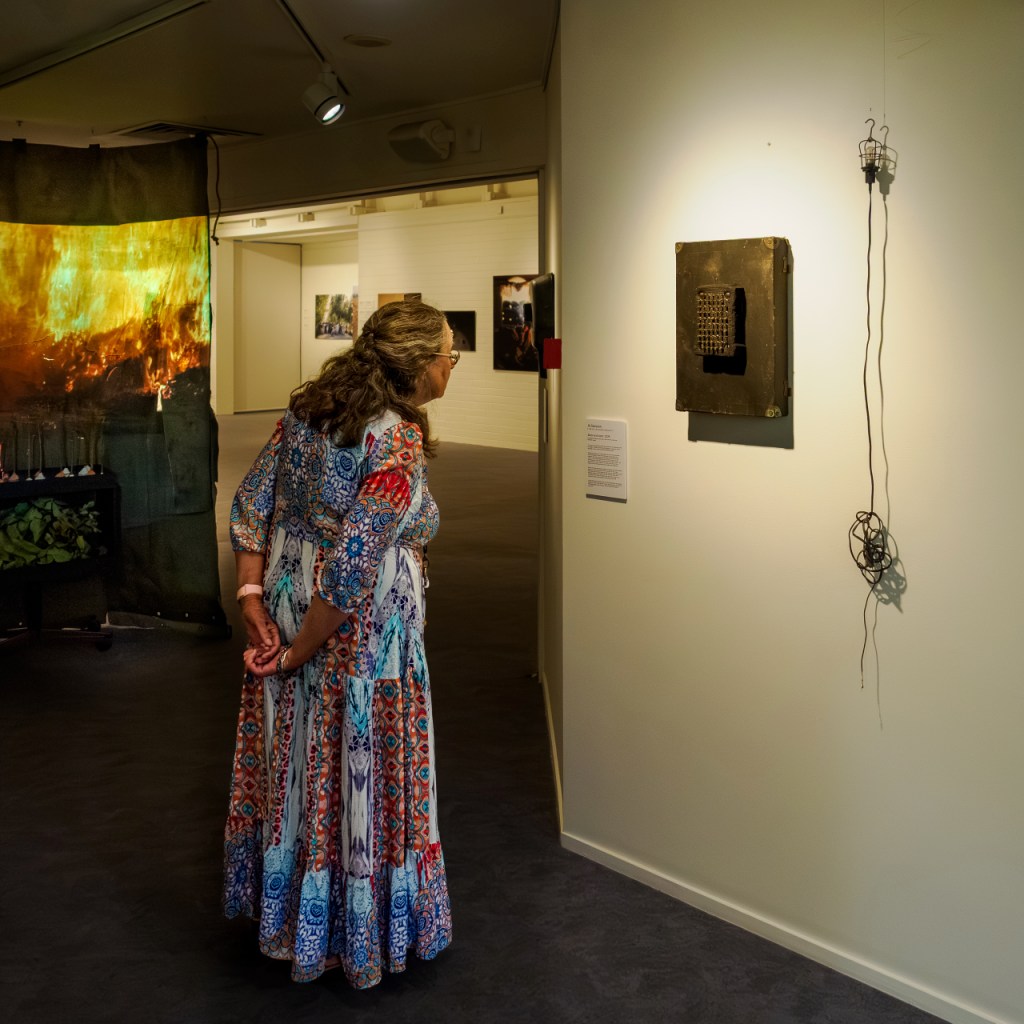
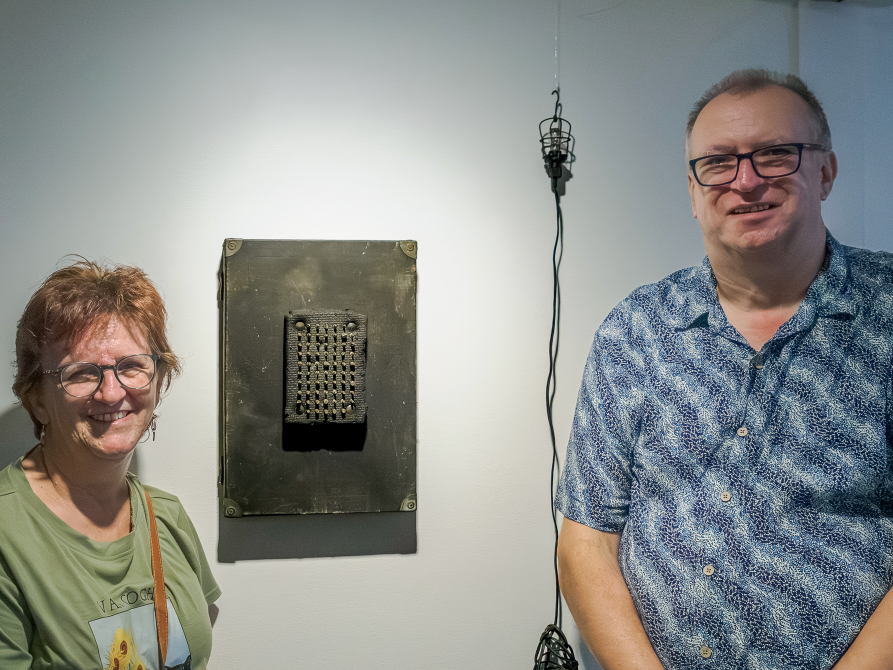
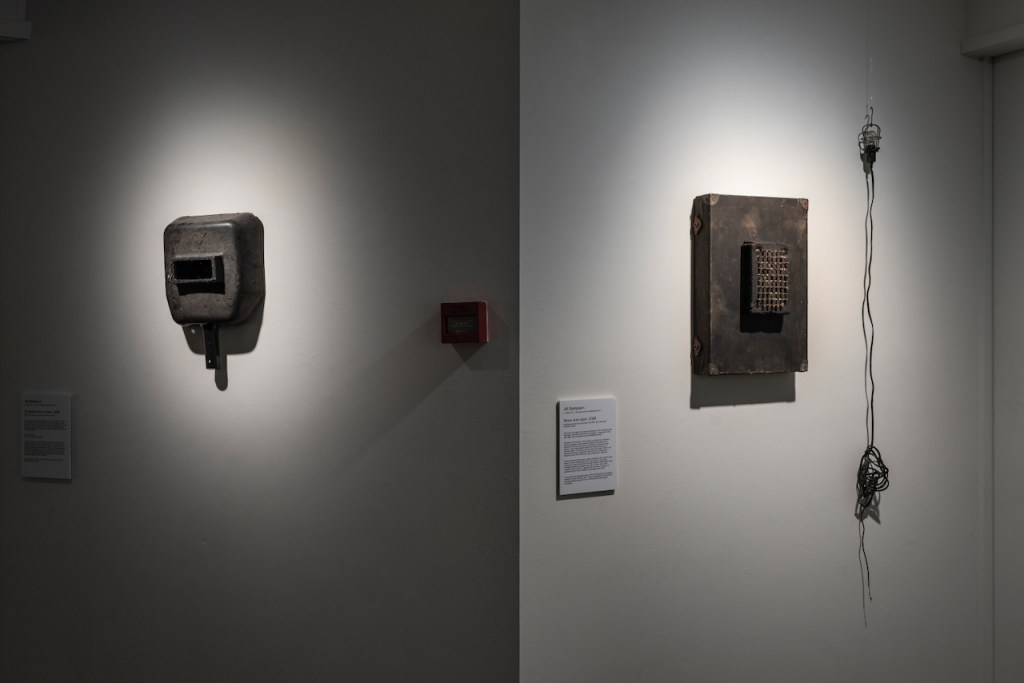
Moon and Stars
2026
gramophone case lid, drill drivers, bolts, synthetic rubber, work light.
540mm x 116mm x 1230mm (L x W x H)
The moon and stars have been way finders for all creatures since life began, providing humans with navigation, measures of time, night light, story narratives and breathtaking beauty.
Wherever in the world, I have looked up at the moon and sent silent messages to loved ones far away. During illness and hardship, the moon and stars provide both a touchstone and solace. I have often walked home from night burning, or on evening walks, in company with the moon and stars. When I am dead and turning to compost in the earth of our family farm, I hope the moon will continue for eons, lighting the night sky.
Across the world billionaires, private companies and nations have begun a moon mining space race. Some aim to use moon resources to fuel human travel to other planets, while others covet valuable minerals and gases they plan to claim, mine, then transport back to Earth. It appears ‘we’ are keen to export our problems to the moon instead of addressing them here. During 2025 we breached seven of the nine planetary boundaries needed to keep humanity safe. These boundaries are the Earth’s operating systems that form our interconnected life-support processes.
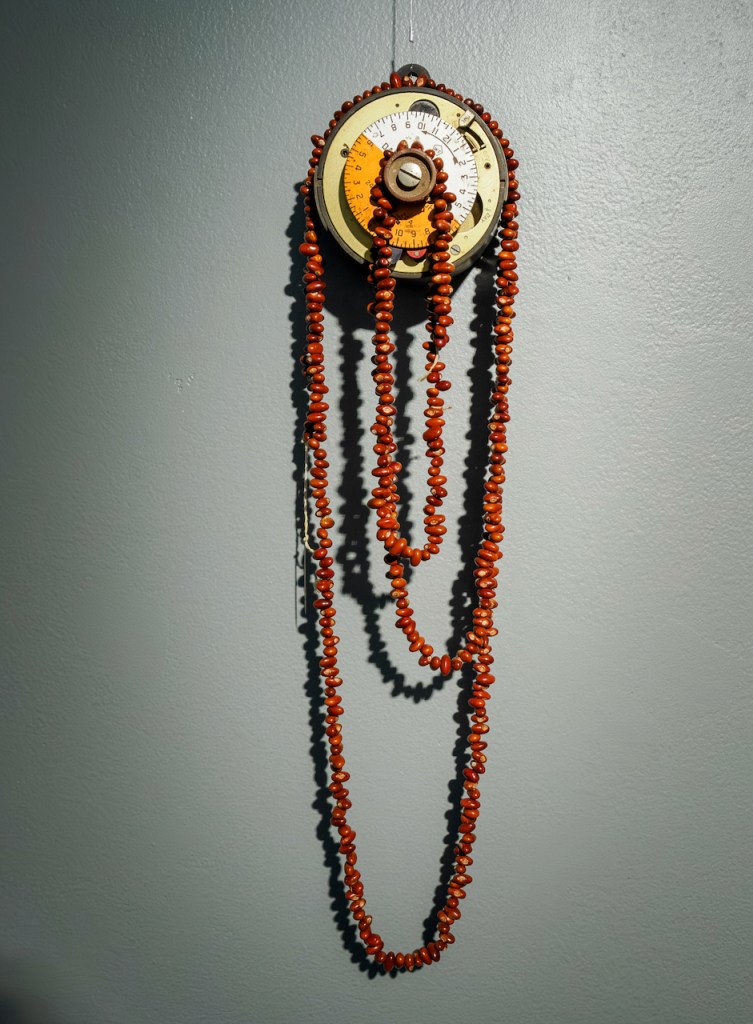
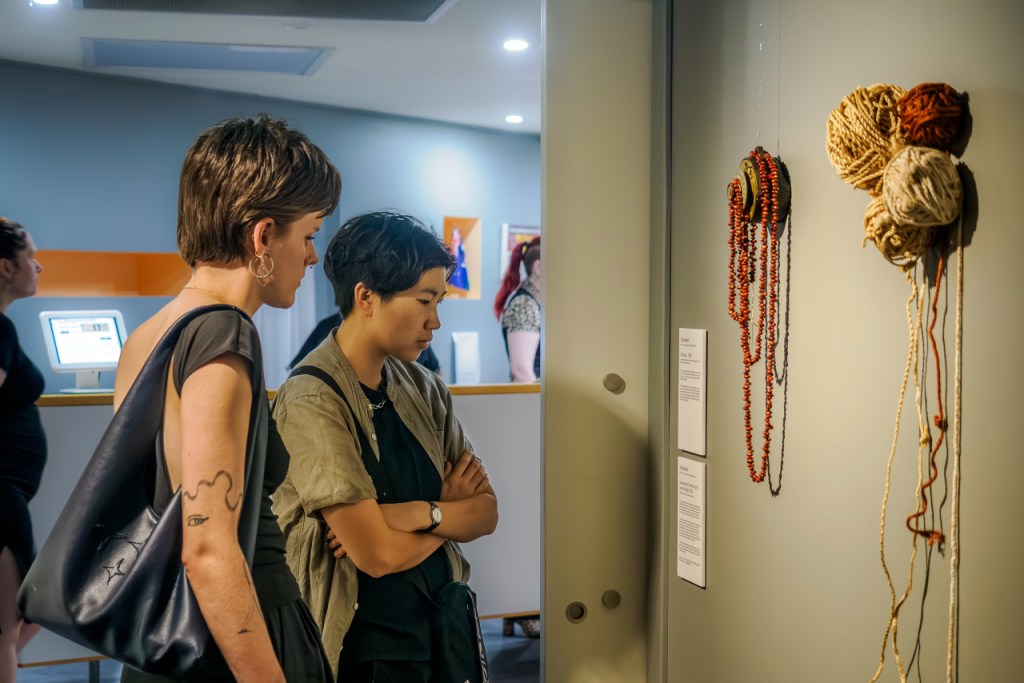
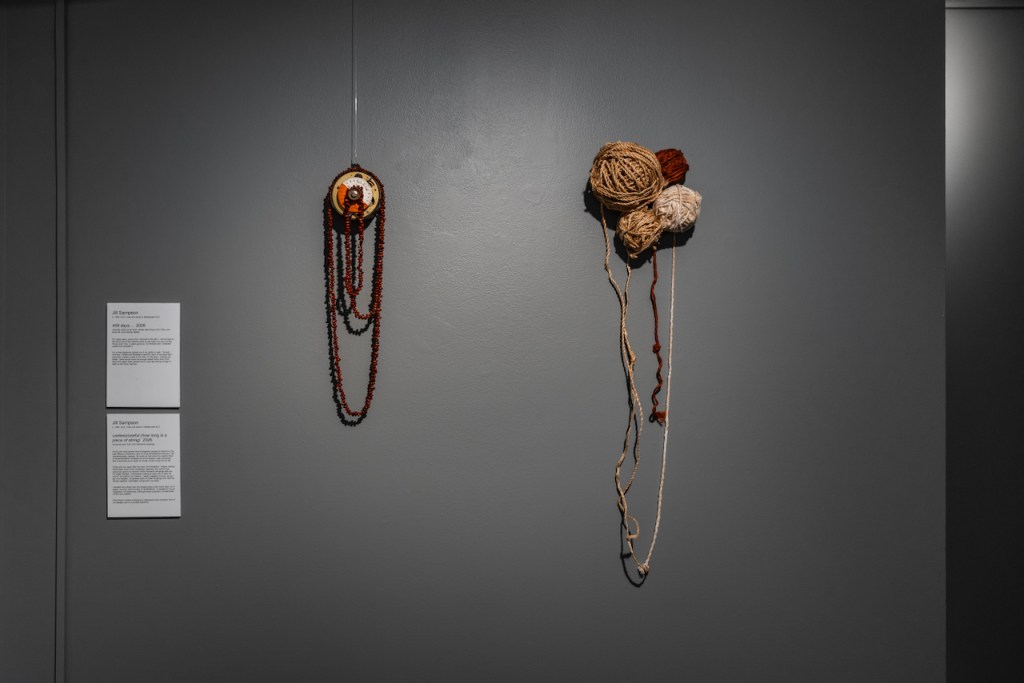
459 Days…
2026
Bats Wing Coral Tree seeds, obsolete water pump timer, eco-dyed silk thread, sewing needle
size: 115 x 80mm x 485mm (L x W x H)
For many years, every time I returned to the farm, I would walk up the hill to one of the highest points to say hello to a very old Bat Wing Coral Tree. In years gone by, my children and I collected seeds from beneath it.
For a time Myeloma robbed me of my ability to walk. Through recovery I drilled and threaded a seed for each of the days that I had been unable to walk to this tree. At 459 days I realised the futility – there would never be enough seeds! More than 2030 days and nights have passed since I was last strong enough to walk up the hill to that tree.
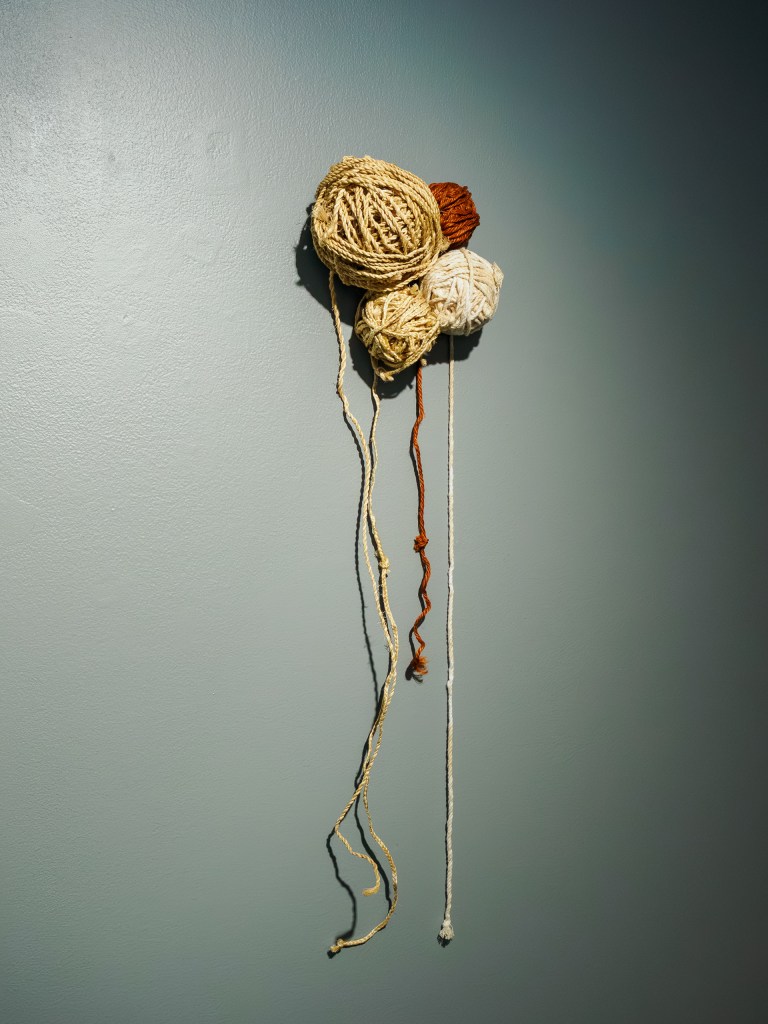
Useless/useful(how long is a piece of string)
2026
reclaimed yarn from 1970’s macrame hangings
230mm x 125mm x 930mm (L x W x H)
During the most severe time of disability caused by myeloma, the side effects of treatment, and my long rehabilitation/recovery I felt overwhelmingly useless. So much so that when the weekly dose of dexamethasone dropped out of my system I was convinced that it would be much better for those I loved if they let me die.
While still very weak after the stem cell transplant, I began making these balls of yarn from reclaimed materials. My mother had previously given me several 1970s macramé hangings that she no longer wanted. (I remember making at least one of them at school, as a gift to my mother). I wasn’t capable of much, so as I lay on a daybed I unravelled each of these hangings then tied the strings together, eventually rolling them into balls.
I worked very slowly and this simple project took many days, but it began my long, slow process of rehabilitation. It created for me an impression of usefulness, although these imperfect, knotted balls of fibre are useless.
How long is a piece of string is a reference to the unknown time of my lifespan due to incurable Myeloma.
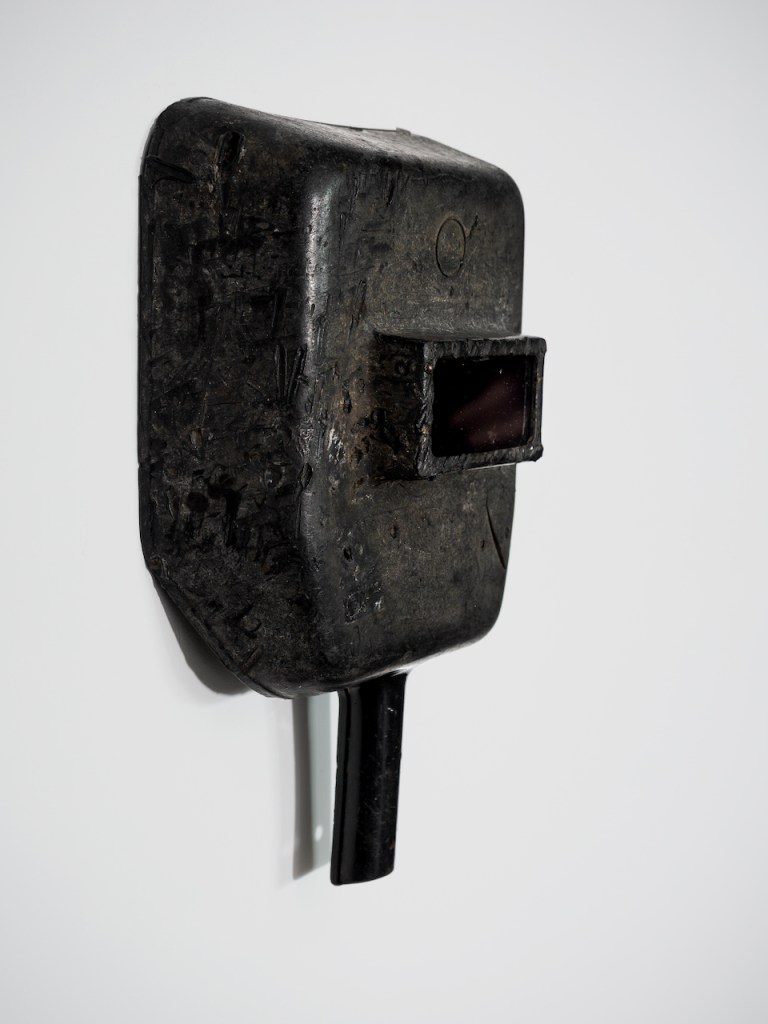
It’s getting hot in here
2026
hand-held welding mask
247mm x 103mm x 360mm (L x W x H)
From when a tiny child I was taught to look away when my father was welding, or the bright hot flash would burn my eyes. I was also told to keep far enough away to prevent hot slag from landing a burn on my skin, clothes or in my boots. The ability to follow simple directives means safety and survival for children growing up on a family farm.
Don’t look away.
Each year the heat increases…
The science is clear…to hold global warming to well below 2°C, Australia needs to reduce climate pollution to 75% below 2005 levels by 2030, and reach net zero by 2035. Every fraction of a degree of warming avoided matters. While some climate impacts are getting progressively worse, like heatwaves or bushfire risk, beyond 2°C scientists warn that we will see abrupt, irreversible changes or tipping points that supercharge global warming and cause widespread system collapse…
‘Why Australia needs to set a strong climate target this year’, July 28 2025, Climate council website
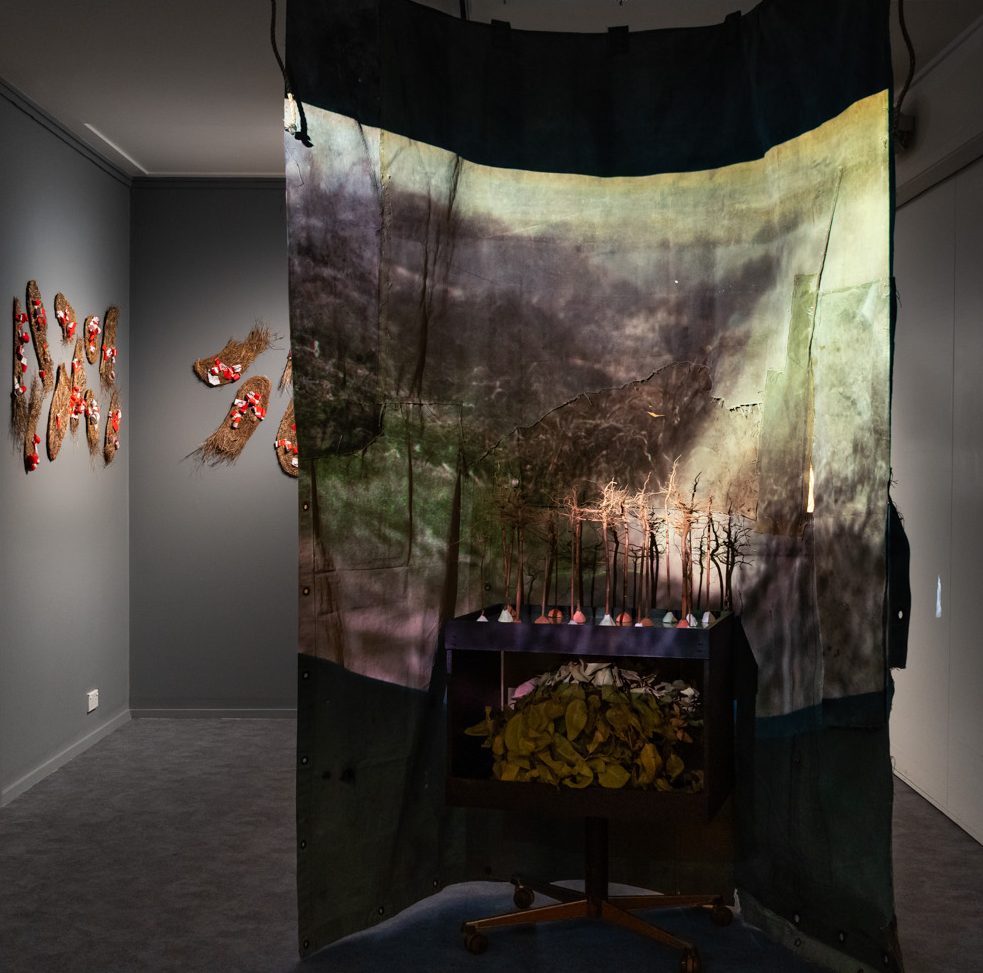
fire-ways (installation detail), photo Louis Lim 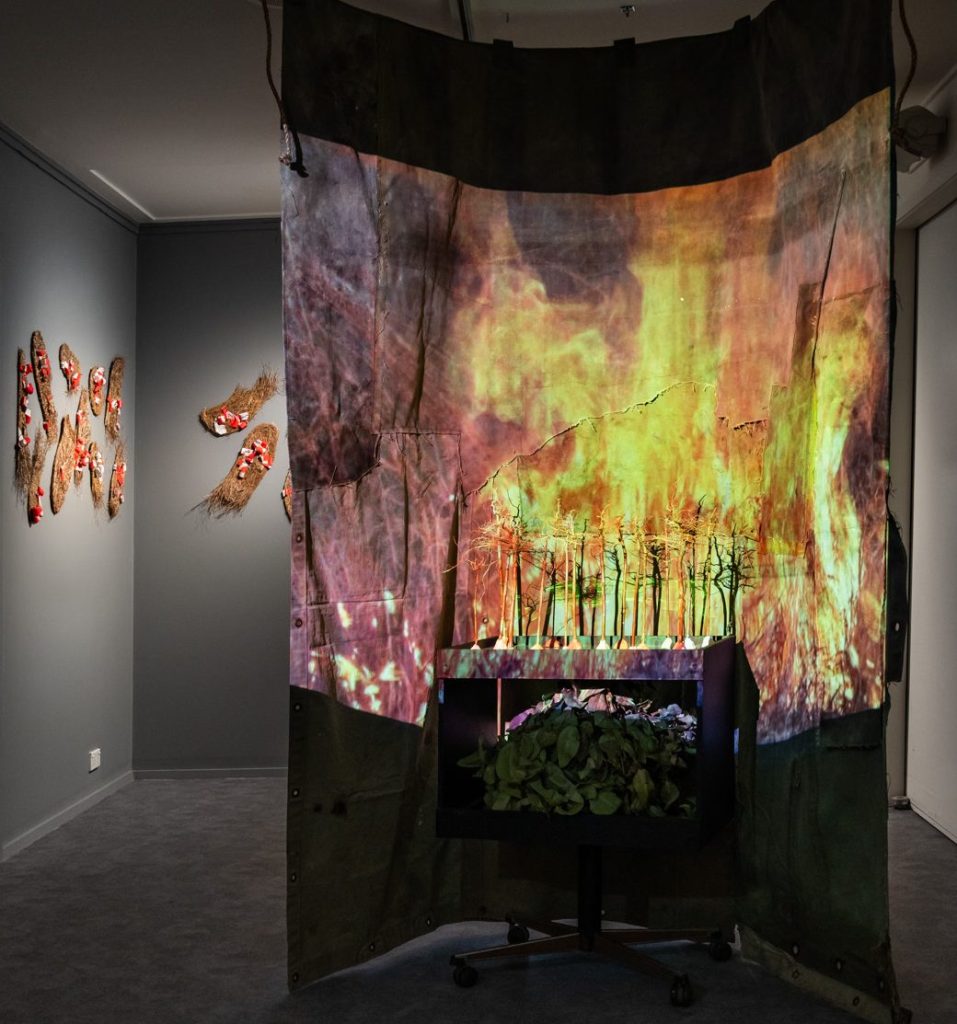
fire-ways (installation detail), photo Louis Lim 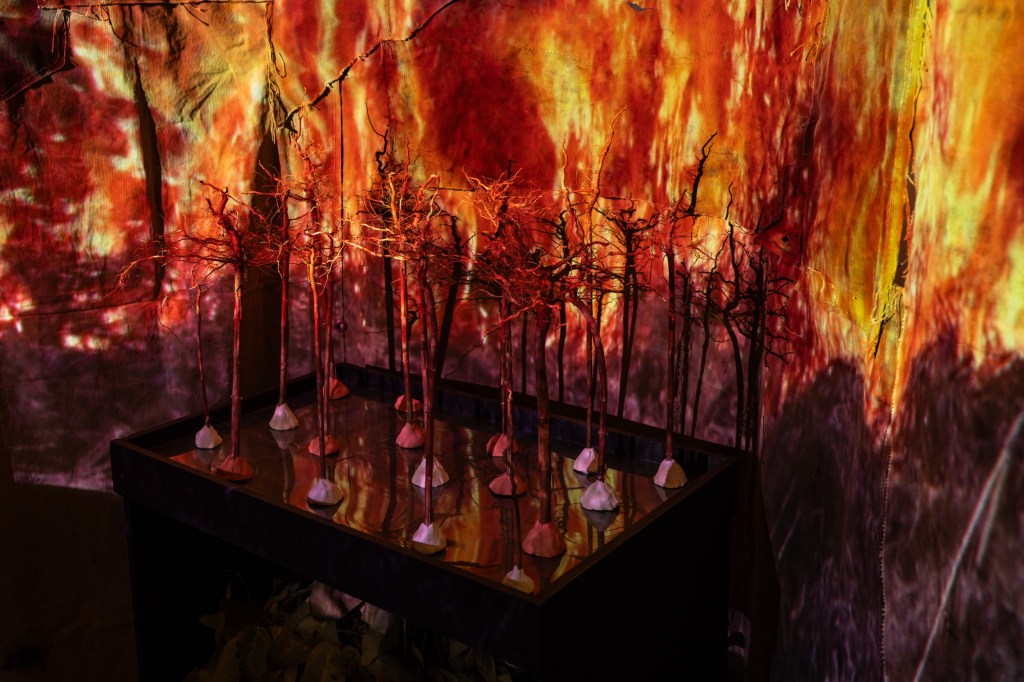
fire-ways (installation detail), photo Louis Lim 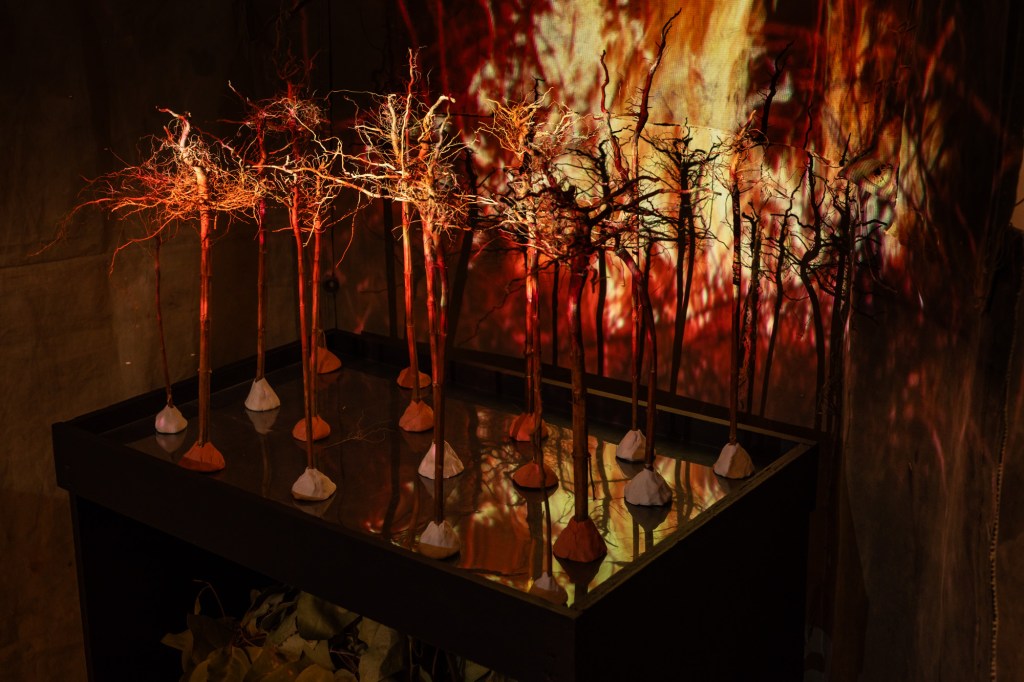
fire-ways (installation detail), photo Louis Lim 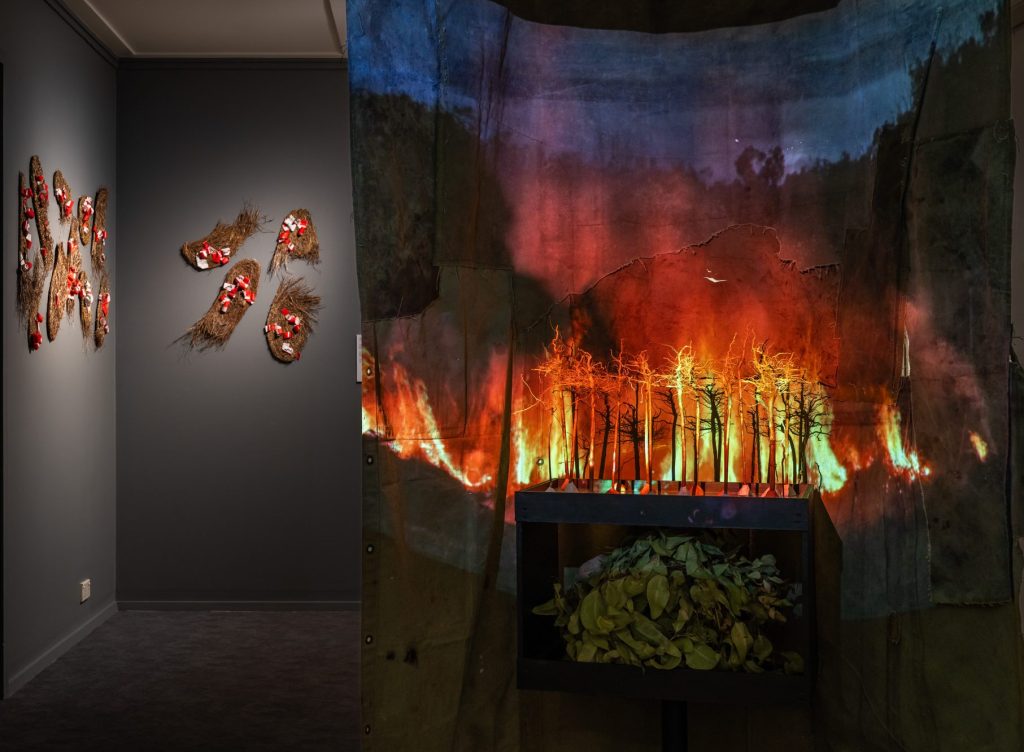
fire-ways (installation detail), photo Louis Lim 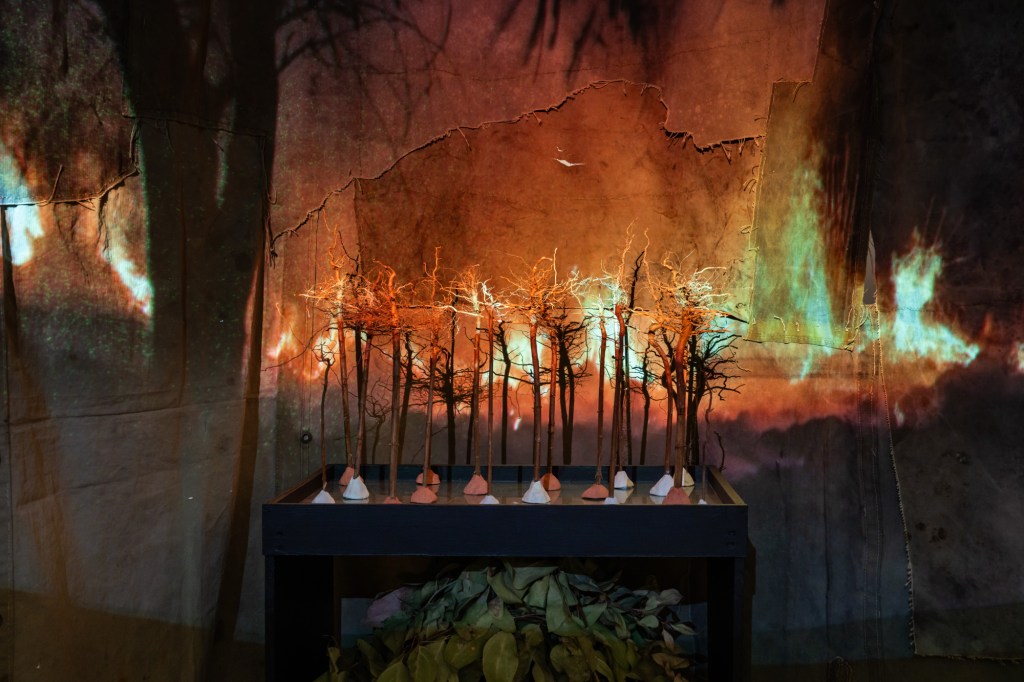
fire-ways (installation detail), photo Louis Lim 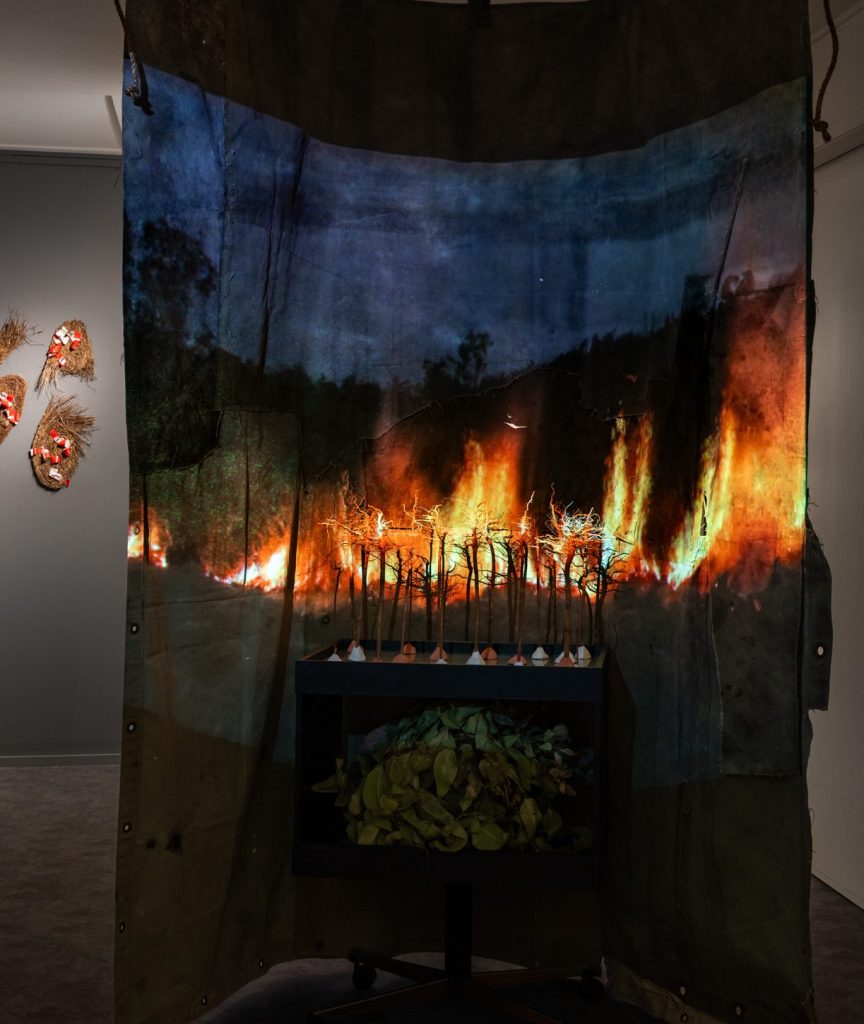
fire-ways (installation detail), photo Louis Lim
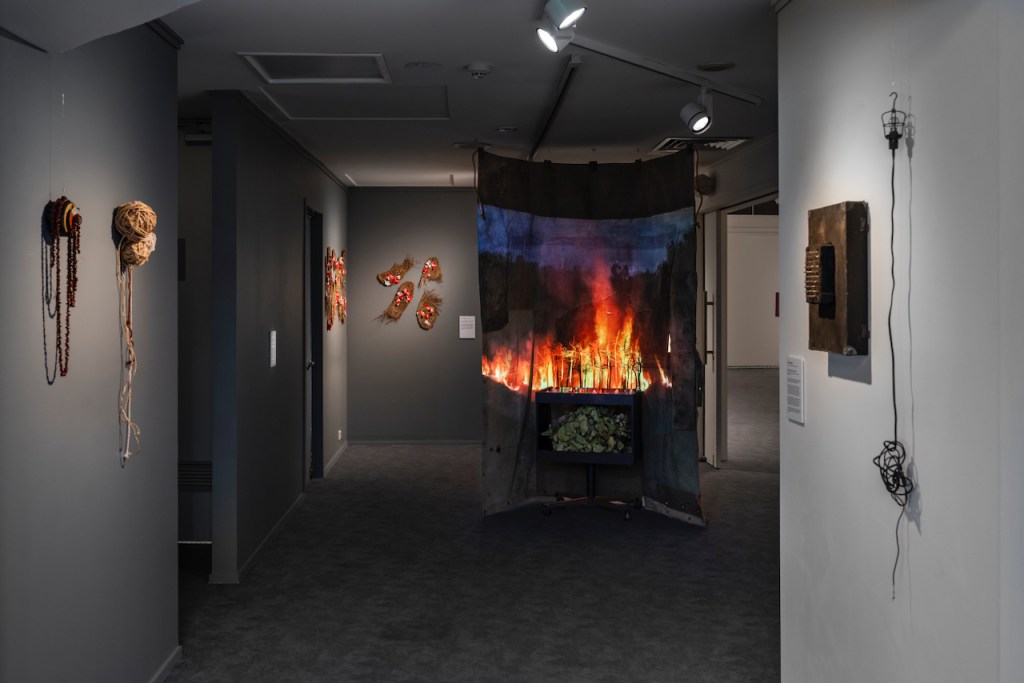
fire-ways
2026
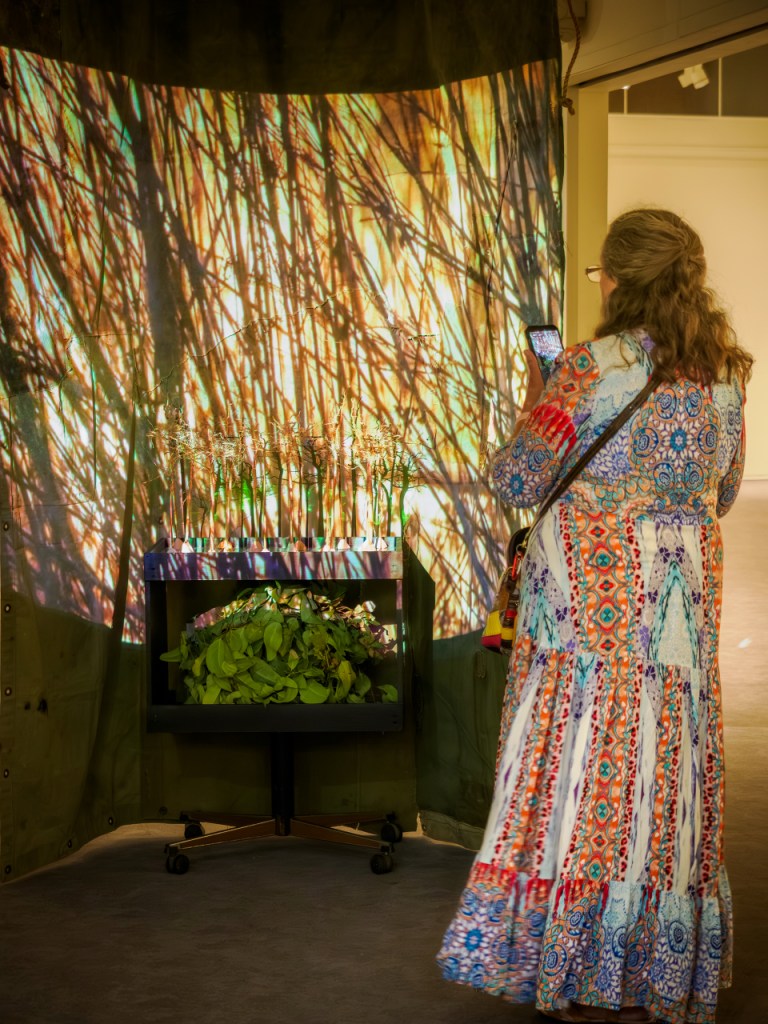
agricultural canvas tarps, wire, eucalyptus leaves/twigs, stinking roger (Tagetes minuta), air dry clay, timber, tv stand, waxed thread, mylar, rope, and digital video projection
1200mm x 850mm x 2340mm (L x W x H)
Note: This work is adaptable with size variable to work in different space requirements
fire-ways explores how fire can be either destructive or bring healing and positive environmental benefits to the land and its people.
Fire is increasingly on our minds as climate and seasonal conditions grow hotter and we look to navigate ourselves and this farm safely through each year. The post invasion destruction of Indigenous peoples and their land care and management systems, increasing exotic weed species and agricultural/industrial changes to the land are all major factors in the increase of dangerous fire. Victor Steffensen’s book Fire Country brought us an understanding of how the right kind of fire can help bring better results for land, environment and a pathway to reduce dangerous fire. This began our own journey to understand and explore cool fire burning.
During 2025 Victor Steffensen, Firesticks Alliance and Bunya Peoples’ Aboriginal Corporation began a multi-year project called Indigenous Knowledge for Climate Resilience, that we are very excited to be a part of.
Adjacent to this project we continue to develop our cool burning program when seasons and conditions are conducive. fire-ways features a cool fire burn by the artist and her father.
Thank you to Malcolm Paterson for the original video footage.
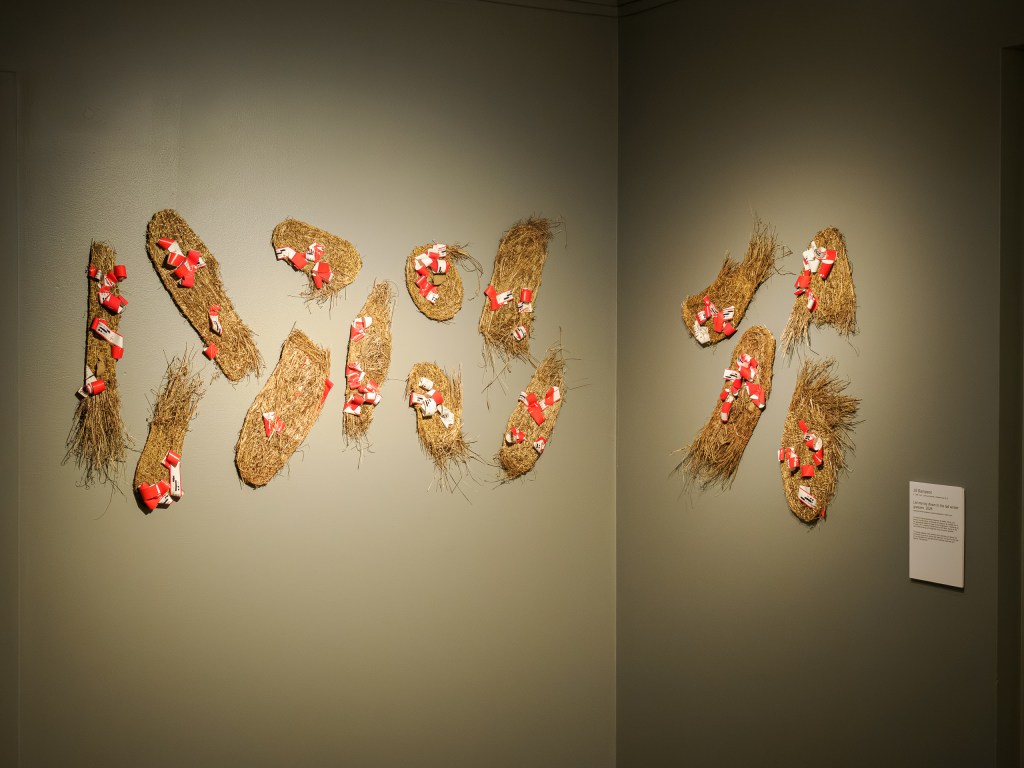
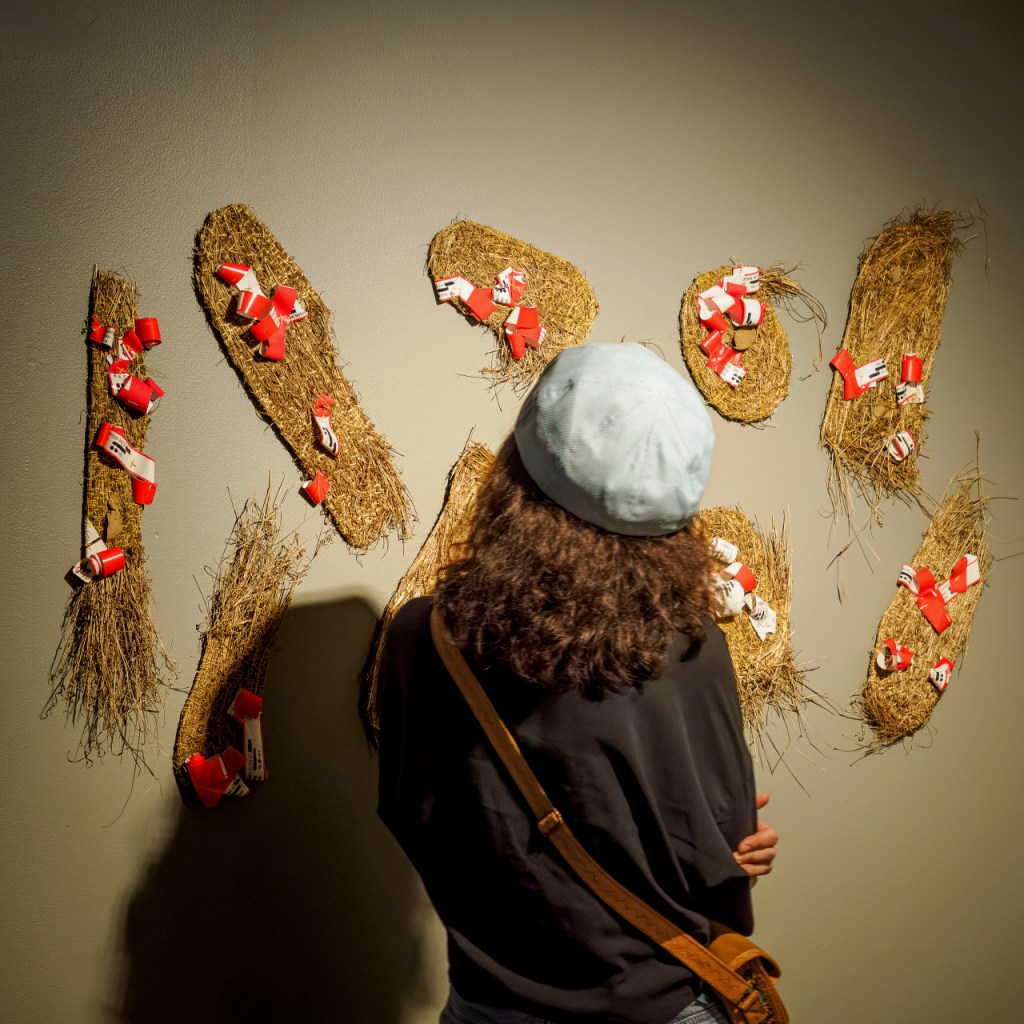
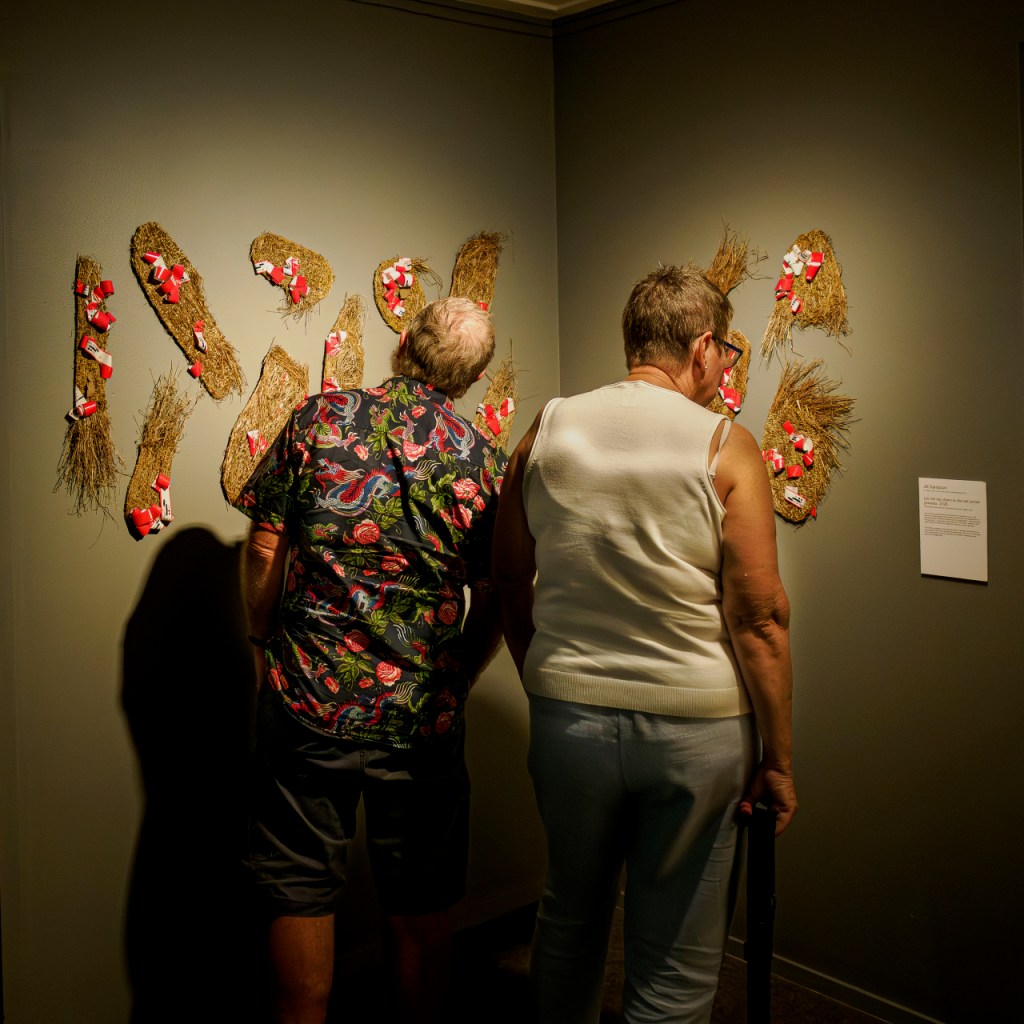
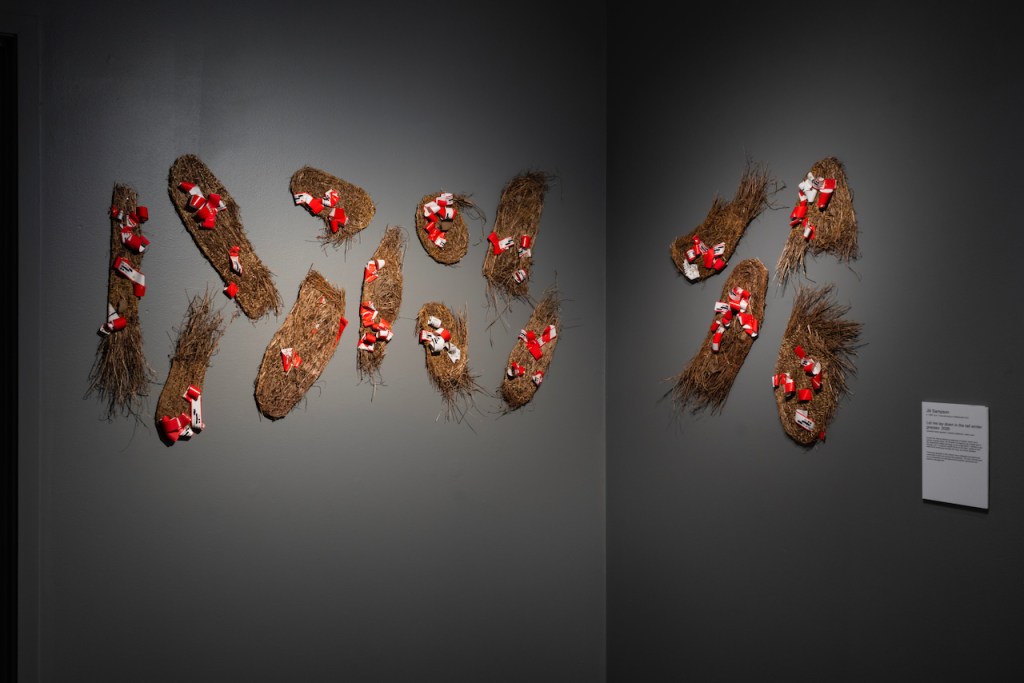
Let me lay down in the tall winter grasses
2026
collected winter grasses, hospital wristbands, cotton yarn.
Size: multiple objects of variable size
photo Malcolm Paterson
Across the intense Myeloma treatment of weekly chemo and various hospital stays, the threads of longing to be outside and in the grasslands helped me keep up the pragmatism I needed to go through it all. I imagined myself home on the farm, laying on the earth while looking up through the long, dry winter grasses.
The winter grasses in this artwork were collected just before we conducted a cool burn across that paddock. The burn formed part of our preparation for spring/summer bushfire readiness and pasture management.
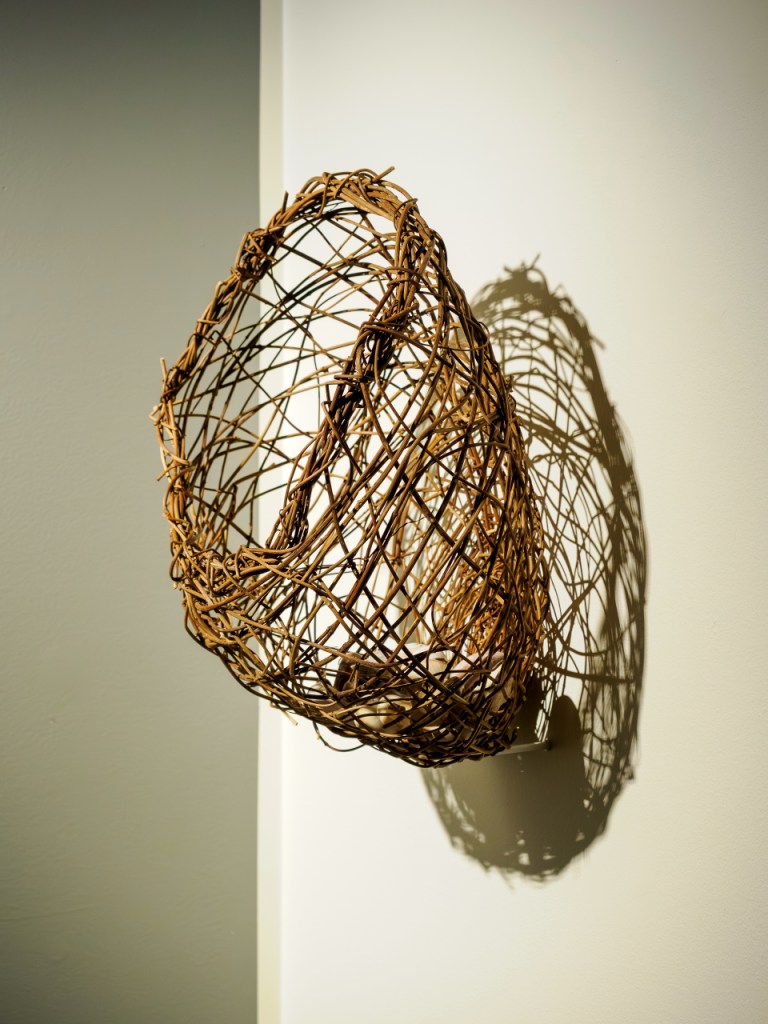
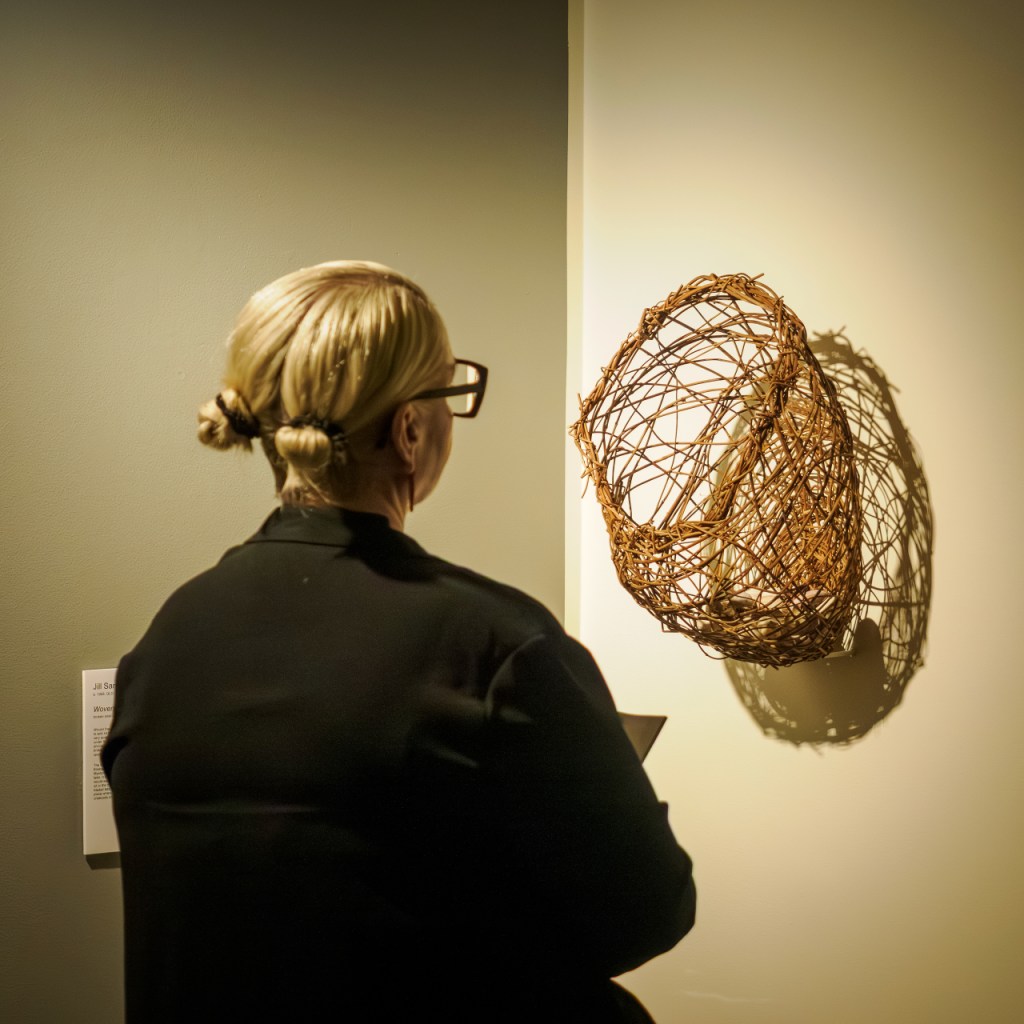
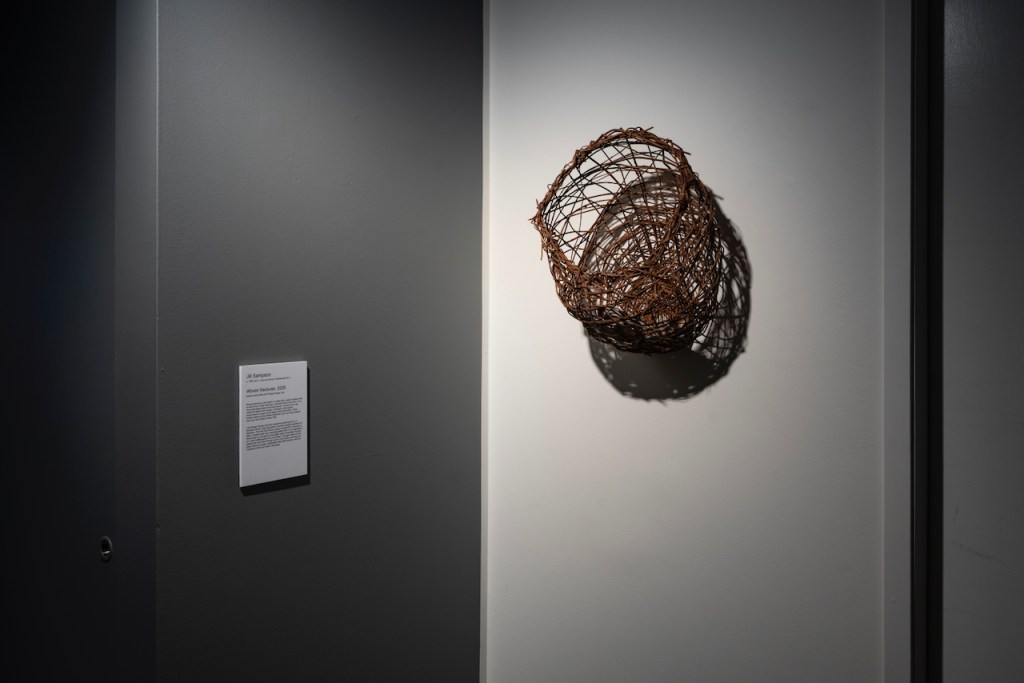
Woven fractures
2026
wonga wonga vine, broken snail shells from vine scrub
350mm x 260mm x 445mm (L x W x H)
Woven Fractures is grounded in a place that I used to always walk to and sit for a while whenever I returned home to the farm. It’s a very quiet place where vine forest grows. I would sit on a log under the darker tree canopy, immersed in the natural environment to observe and listen to the forest birds. These broken shells are from forest snails that may have been preyed upon by a bird called a Noisy Pitta.
The wonga wonga vine that I made this weaving from is in Brisbane where I was living while I received medical treatment for Myeloma. The vine had its own opinion on what form it wanted to take. It shaped itself into a carrying basket that in my imagination I would wear on my back to once again walk to that fallen log and sit in the muffled quiet of the vine forest. The open weave of this basket lets much flow through, yet for me it holds a promise of a place where its cousin, colloquially called Stiff Jasmine, and the creatures of the vine forest, hold sway.
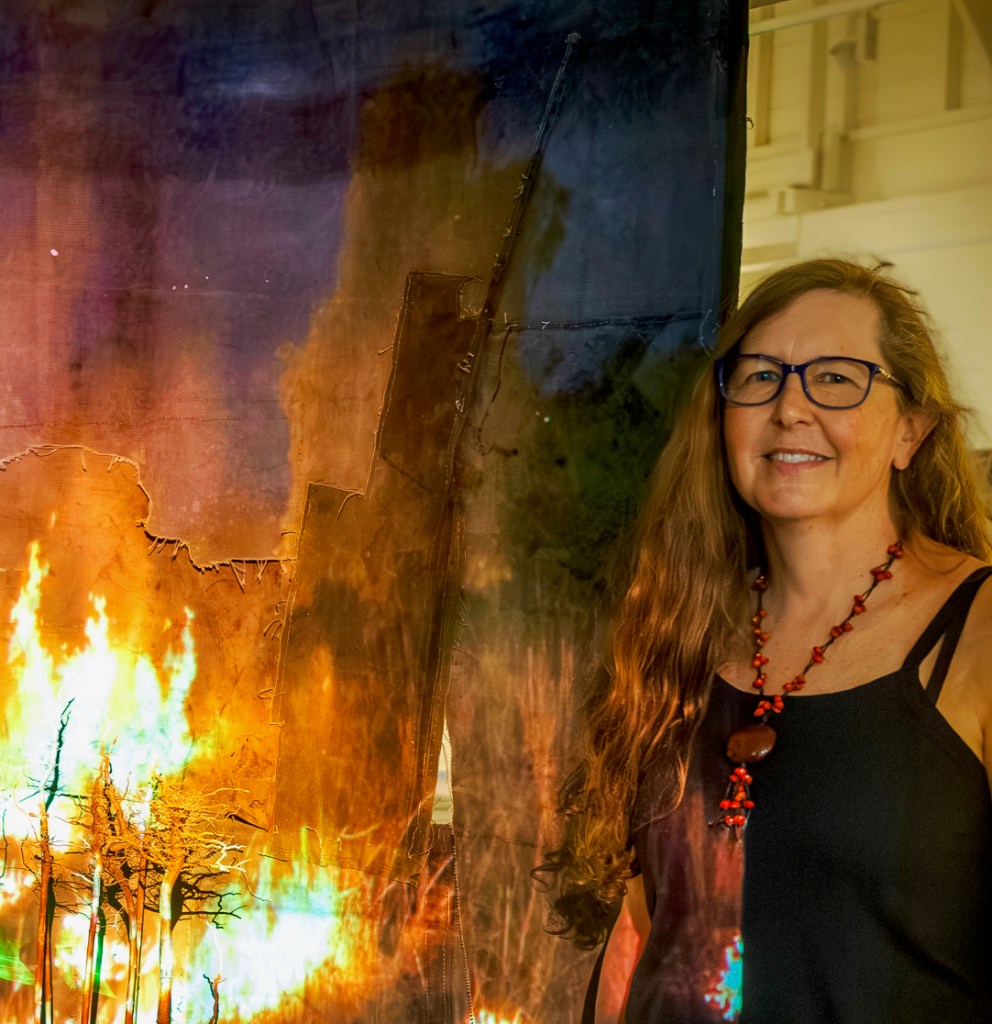

 Jill Sampson